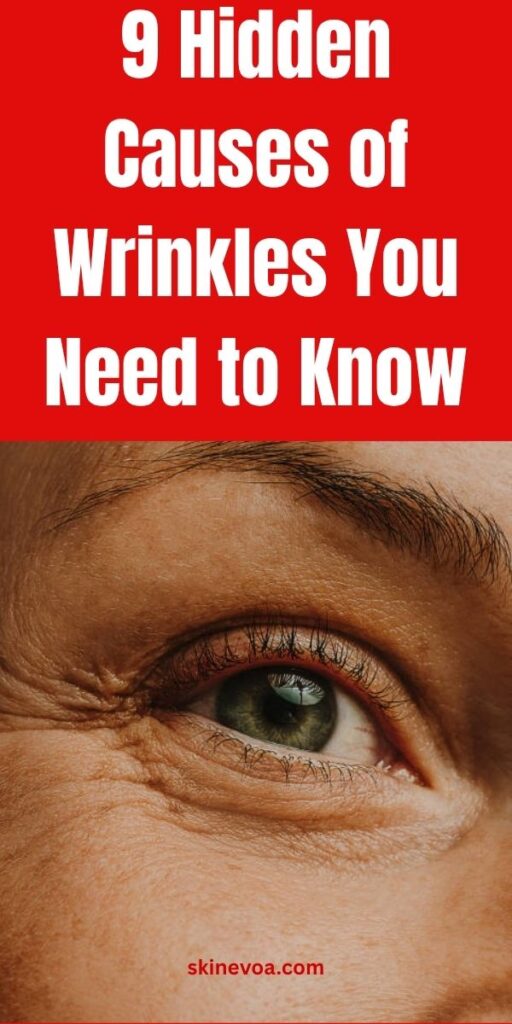

One morning you catch your reflection while brushing your teeth.
Maybe it’s a tiny line near your eyes. Perhaps there’s a faint crease across your forehead that wasn’t there a year ago. You blink, lean closer to the mirror, and wonder, Was that always there?
Honestly, this happens to almost everyone.
Wrinkles have a funny way of seeming to appear overnight, even though they’ve usually been forming quietly for years. They’re part of getting older, but that’s only part of the story. Some people reach their forties with remarkably smooth skin, while others notice fine lines in their late twenties.
So what’s going on?
The answer is surprisingly interesting. Wrinkles don’t have one single cause. They’re the result of several small changes happening inside your skin every day. Some of those changes are completely natural. Others are influenced by your habits, your environment, and even the expressions you make without thinking.
The good news? Once you understand what causes wrinkles, it becomes much easier to protect your skin for the long run.
Let’s explain what’s really happening beneath the surface.
What Exactly Are Wrinkles?
Wrinkles are folds, creases, or lines that develop when skin gradually loses its ability to stay smooth and spring back into place.
Think of your skin like a brand-new cotton T-shirt.
When it’s new, it stretches easily and snaps back into shape. After years of washing, drying, sunlight, and daily wear, the fabric becomes thinner and softer. Eventually, permanent creases appear.
Your skin behaves much the same way.
Healthy young skin contains large amounts of:
- Collagen, which provides strength
- Elastin, which allows skin to stretch and bounce back
- Hyaluronic acid, which helps keep skin hydrated
As these natural building blocks decline, skin becomes thinner, drier, and less flexible. That’s when fine lines begin to show. Over time, those lines may deepen into wrinkles.
The Science Behind Wrinkle Formation
Here’s the thing.
Your skin is constantly repairing itself.
Every day, your body creates new collagen while breaking down old collagen. When you’re young, production easily keeps pace with breakdown.
Eventually, though, the balance shifts.
Research shows collagen production starts slowing as early as your twenties. By your thirties, many people lose roughly 1% of their collagen each year, although the rate varies from person to person.
Meanwhile, years of sunlight, pollution, and normal wear gradually damage existing collagen fibres.
Imagine trying to maintain a brick wall while removing bricks faster than you replace them.
Eventually, the structure weakens.
That’s essentially what happens inside aging skin.
The Biggest Causes of Wrinkles
1. Natural Aging: The Cause Nobody Can Avoid
Aging remains the biggest reason wrinkles develop.
As birthdays pass, several natural changes happen inside the skin:
- Cell turnover slows.
- Oil production decreases.
- Skin loses moisture more easily.
- Collagen production drops.
- Elastin fibres become weaker.
- Fat beneath the skin gradually shifts and thins.
Together, these changes make skin less firm and more likely to crease.
This process is called intrinsic aging, and everyone experiences it, just at different speeds. Genetics plays a major role.
2. Sun Exposure: The Biggest External Cause
If aging is inevitable, sun damage is often optional.
Dermatologists estimate that a large share of visible facial aging comes from ultraviolet (UV) exposure rather than chronological age alone. UV rays damage collagen and elastin, speeding up what’s known as photoaging.
This damage doesn’t only happen during beach vacations.
It happens when:
- Driving
- Walking to work
- Sitting near sunny windows
- Running errands
- Playing outside with children
The tricky part?
Sun damage accumulates slowly.
A few minutes today doesn’t seem like much. But thousands of “few minutes” over years add up.
That’s why dermatologists consistently recommend wearing broad-spectrum SPF 30 or higher every day, even when it’s cloudy.
3. Repeated Facial Expressions
Smiling.
Laughing.
Squinting.
Raising your eyebrows during meetings.
These movements are part of being human. They aren’t bad.
Early in life, your skin easily bounces back after every expression. Later, as elasticity declines, those temporary folds begin sticking around.
These are called dynamic wrinkles, and they commonly appear as:
- Crow’s feet
- Forehead lines
- Frown lines
- Smile lines
Eventually, they may become visible even when your face is relaxed.
4. Smoking
Smoking affects nearly every layer of the skin.
It reduces blood flow, limits oxygen delivery, increases oxidative stress, and damages collagen-producing cells.
Smokers often develop:
- Deeper wrinkles around the mouth
- Earlier crow’s feet
- Duller skin tone
- Reduced skin elasticity
Even secondhand smoke may contribute to long-term skin damage, though the effects are generally smaller than active smoking.
5. Air Pollution
Here’s something people rarely think about.
Pollution doesn’t simply affect your lungs.
Tiny airborne particles generate free radicals that damage skin cells and weaken collagen over time. Living in busy urban areas may increase visible signs of aging, especially without regular cleansing and sun protection.
6. Stress and Poor Sleep
Ever noticed your skin looks tired after several restless nights?
That’s not your imagination.
During sleep, your body carries out much of its repair work, including processes that support healthy skin. Chronic stress and insufficient sleep may increase inflammation and interfere with normal repair, which can contribute to earlier visible aging over time.
No cream can fully replace consistent, good-quality sleep.
7. Diet and Hydration
Food won’t erase wrinkles.
Still, nutrition matters.
A balanced diet rich in fruits, vegetables, healthy fats, lean proteins, and antioxidant-containing foods supports overall skin health.
Hydration also helps the skin appear smoother, although drinking extra water alone won’t remove established wrinkles.
Think of healthy eating as supporting your skin from the inside rather than acting as a miracle treatment.
8. Hormonal Changes
Many women notice skin changes during menopause.
Lower estrogen levels reduce collagen production and skin thickness while increasing dryness.
As a result, wrinkles may become more noticeable over a relatively short period.
Hormonal shifts after pregnancy or during other life stages can temporarily affect skin appearance too, though these changes vary widely between individuals.
9. Genetics
Sometimes you can do almost everything right and still develop wrinkles earlier than someone else.
That’s genetics.
Your inherited genes influence:
- Skin thickness
- Collagen production
- Elasticity
- Natural oil levels
- Skin tone
- How your body repairs UV damage
Genes don’t determine everything, but they certainly influence how your skin ages.
Can Young People Get Wrinkles?
Absolutely.
Fine lines in your twenties aren’t unusual.
Early wrinkles may appear because of:
- Frequent sun exposure
- Tanning beds
- Smoking
- Chronic dehydration of the skin
- Poor sleep habits
- Repetitive facial movements
- Genetics
Many of these early lines are still mild and may become less noticeable with consistent skincare and sun protection.
Fine Lines vs. Deep Wrinkles
People often use these terms interchangeably, but they’re slightly different.
Fine lines are shallow surface creases that usually appear first around the eyes or mouth.
Deep wrinkles extend farther into the skin because collagen loss and structural changes have progressed over many years.
Fine lines often respond well to moisturisers, sunscreen, and retinoids. Deep wrinkles usually require professional cosmetic treatments if someone wants significant improvement.
Common Myths About Wrinkles
Myth: Only older people get wrinkles.
Not true.
Sun exposure, smoking, and genetics can lead to wrinkles much earlier.
Myth: Moisturiser removes wrinkles.
Moisturiser doesn’t erase wrinkles.
It temporarily plumps the outer skin layer, making fine lines look softer.
Myth: Expensive skincare always works better.
Price doesn’t guarantee better results.
Many dermatologists emphasise ingredients, such as retinoids, sunscreen, and vitamin C—over luxury branding.
Myth: If you stay indoors, you don’t need sunscreen.
UV rays can reach you through windows, especially UVA rays that contribute to photoaging. Daily sunscreen remains one of the most effective preventive steps.
How to Slow Down Wrinkle Formation
You can’t stop aging.
Nobody can.
But you can influence how quickly wrinkles develop.
Some of the most evidence-based habits include:
- Wear broad-spectrum SPF 30+ sunscreen every day.
- Avoid tanning beds.
- Don’t smoke.
- Moisturise consistently.
- Consider retinoids if appropriate for your skin.
- Use antioxidants like vitamin C in the morning.
- Eat a nutrient-rich diet.
- Stay physically active.
- Sleep seven to nine hours most nights.
- Manage stress where possible.
Notice what’s missing?
There’s no single miracle product.
Healthy skin is usually the result of many small habits repeated consistently over months and years.
When Should You Start Preventing Wrinkles?
This surprises many people.
Most dermatologists recommend prevention before wrinkles become obvious.
That doesn’t mean teenagers need complicated anti-aging routines.
For most adults, a simple routine is enough:
Morning
- Gentle cleanser
- Vitamin C serum (optional)
- Moisturizer
- Broad-spectrum sunscreen
Evening
- Cleanser
- Retinoid or retinol if suitable
- Moisturizer
Simple routines are often easier to maintain than complicated ten-step regimens.
Consistency usually matters more than quantity.
Frequently Asked Questions
What causes wrinkles the most?
Chronic sun exposure is considered the leading external cause of premature wrinkles, while natural aging remains the primary internal cause. Together, they account for most visible skin aging.
Can wrinkles disappear naturally?
Established wrinkles usually don’t disappear completely. Good skincare can soften their appearance, especially fine lines, but deeper wrinkles typically remain.
Does drinking more water prevent wrinkles?
Hydration supports healthy-looking skin, but water alone won’t stop collagen loss or reverse wrinkles.
Are wrinkles a sign of unhealthy skin?
Not necessarily.
Wrinkles are a normal part of aging. Healthy skin can still develop wrinkles over time.
Can sunscreen really make that much difference?
Yes.
Daily sunscreen is one of the most consistently supported ways to reduce premature skin aging because it helps limit UV damage that breaks down collagen and elastin.
Final Thoughts
Wrinkles aren’t simply a sign that you’re getting older. They’re the visible result of countless small changes taking place beneath your skin over many years.
Some factors, like genetics and natural aging, are beyond your control. Others, including daily sun exposure, smoking, poor sleep, and inconsistent skincare, can speed the process.
The encouraging part is that prevention doesn’t have to be complicated. Wearing sunscreen every day, caring for your skin gently, eating well, getting enough sleep, and avoiding smoking can make a meaningful difference over time.
Your skin tells the story of your life. Wrinkles are one chapter of that story, not a flaw to erase, but a natural change you can approach with knowledge, realistic expectations, and habits that support healthy skin for years to come.