There’s a very specific kind of frustration that comes with winter skin.
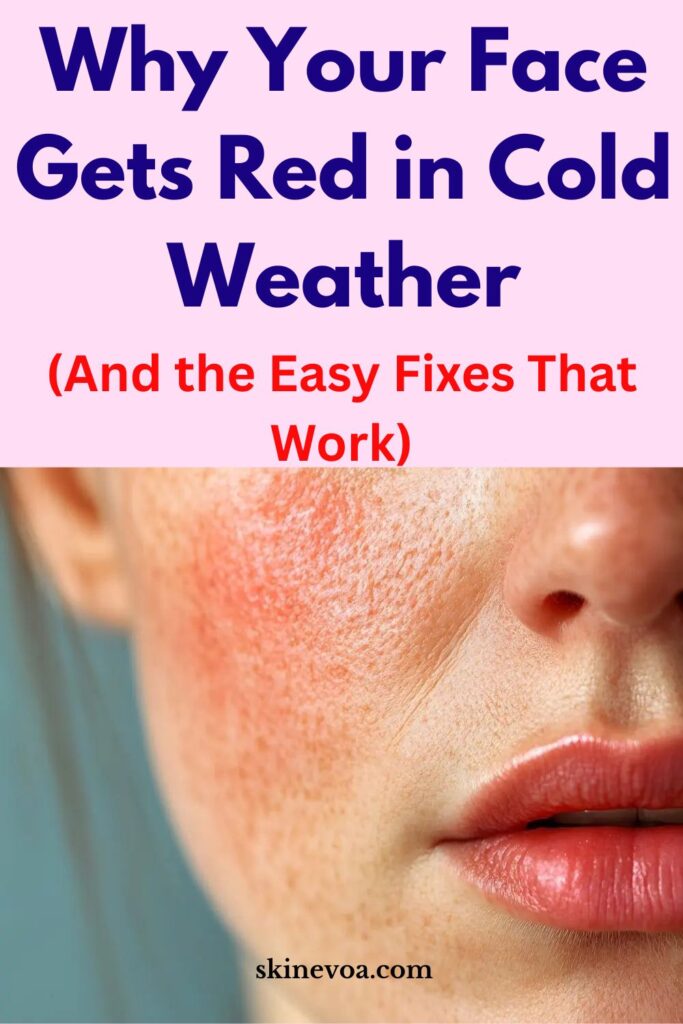
You step outside for five minutes, just five, and suddenly your cheeks are flushed, your nose looks like it belongs in a cartoon, and your skin feels tight in a way that’s hard to ignore. Not painful exactly, but… not comfortable either.
And the confusing part?
It doesn’t always happen to everyone. Or it doesn’t happen the same way.
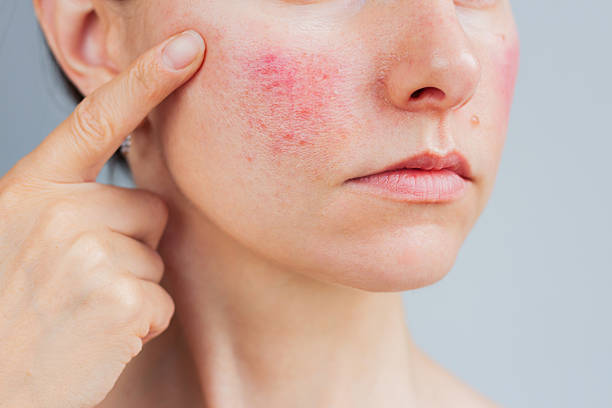
Some people get a soft, rosy glow. Others? Patchy redness, irritation, even stinging.
So what’s actually going on here?
Let me explain.
Why Your Skin Freaks Out When It Gets Cold
At a basic level, cold weather messes with your skin’s balance.
When temperatures drop, your body does something clever: it reduces blood flow to the skin to conserve heat. Then, when you warm up again (like walking into a heated office or house), blood rushes back to the surface.
That sudden shift?
That’s where the redness comes from.
It’s like your skin is constantly adjusting, shrinking, expanding, reacting.
But that’s only part of the story.
Cold air is dry. Indoor heating is dry. And when your skin loses moisture, the barrier that normally protects you starts to weaken.
Think of your skin barrier like a thin jacket.
In summer, it’s enough.
In winter, it suddenly feels inadequate.
When that barrier is compromised:
- Moisture escapes faster
- Irritants get in more easily
- Sensitivity increases
And redness? That’s often your skin waving a small red flag, literally.
It’s Not Just the Cold (There Are Other Culprits)
Here’s where things get a little more layered.
Cold weather alone doesn’t always cause redness. It amplifies other factors.
For example:
- Hot showers (which feel amazing, but strip natural oils)
- Harsh cleansers that worked fine in warmer months
- Over-exfoliation (yes, even that “gentle” exfoliant)
- Wind exposure, which is often worse than the cold itself
- Sudden temperature shifts (outdoor chill → indoor heat)
You might think, “But I haven’t changed my routine.”
That’s the point.
Your routine didn’t change, but your environment did.
And your skin? It notices.
Not All Redness Is the Same (And That Matters)
This is where people often get it wrong: they treat all redness as one thing.
But there are subtle differences.
1. Temporary Flush
That quick redness after stepping outside or coming back in.
- Usually harmless
- Fades within minutes
- More about circulation than irritation
2. Persistent Redness
This sticks around longer, sometimes hours, sometimes all day.
- Often linked to dryness or barrier damage
- Skin may feel tight or sensitive
3. Irritated, Patchy Redness
This one comes with discomfort.
- Burning or stinging sensation
- Flaky or rough texture
- Often caused by over-exfoliation or harsh products
4. Reactive Redness
Triggered by things like:
- Wind
- Skincare products
- Even certain foods or drinks
This type tends to show up quickly, and unpredictably.
Who Gets It Worse? (It’s Not Random)
You might have noticed that some people barely deal with this… while others struggle every winter.
There’s a reason.
You’re more likely to experience redness if you have:
- Naturally sensitive skin
- Conditions like mild rosacea
- A thinner skin barrier
- Fair or light skin tones (more visible blood vessels)
- A history of overusing active ingredients (like acids or retinoids)
Also, this part is often overlooked: stress plays a role.
Busy schedules, lack of sleep, constant indoor heating, back-to-back responsibilities- it all adds up.
Your skin reflects that.
Your Routine Might Be Making It Worse (Without You Realising)
Here’s something that feels a little contradictory:
The more you try to “fix” redness, the worse it can get.
Let me explain.
If your skin is already sensitive, layering too many products or switching products frequently can overwhelm it.
Common mistakes:
- Using strong exfoliants “to smooth texture”
- Washing your face too often
- Skipping moisturiser because skin feels oily (yes, that happens)
- Applying actives without adjusting frequency in winter
Honestly, winter skincare is less about doing more, and more about doing less, but better.
What Actually Helps (In Real Life, Not Just on Paper)
Let’s keep this practical.
You don’t need a 10-step routine. You don’t need a shelf full of products.
You need consistency and a few smart adjustments.
Start with the basics:
- Use a gentle cleanser (non-foaming if possible)
- Apply moisturiser on slightly damp skin
- Avoid super hot water (lukewarm is enough)
- Pat skin dry, don’t rub
Simple? Yes.
But also effective.
Ingredients That Calm vs. Ingredients That Trigger
This part matters more than brand names.
Ingredients that help calm redness:
- Niacinamide (supports barrier function)
- Ceramides (restore moisture)
- Panthenol (soothing, hydrating)
- Aloe vera (light calming effect)
- Centella asiatica (great for sensitive skin)
Ingredients to be cautious with (especially in winter):
- Strong AHAs/BHAs (overuse can irritate)
- Alcohol-heavy formulas
- Fragrance (especially synthetic)
- High-strength retinoids (without adjustment)
You don’t have to avoid these completely, but timing and frequency matter.
Lifestyle Tweaks That Quietly Make a Difference
You know what? Skincare isn’t just about what you put on your face.
A few small changes can shift things significantly:
- Use a humidifier in your room at night
- Drink enough water (yes, it still matters)
- Wear a scarf to protect your face from wind
- Avoid lingering in very hot indoor environments
And here’s one that people rarely mention:
Give your skin a break from constant touching.
It sounds minor, but it adds up.
Makeup and Redness: Working With It, Not Against It
If you wear makeup, redness can feel frustrating.
But you don’t always need full coverage.
Instead:
- Use a green-tinted primer to neutralise redness
- Choose lightweight, hydrating foundations
- Avoid matte formulas that cling to dry patches
- Tap product in, don’t drag it across the skin
Sometimes, less makeup actually looks better when your skin is irritated.
Counterintuitive, but true.
When Redness Isn’t Just “Winter Skin”
Here’s where you pause for a second.
If your redness:
- Doesn’t fade
- Feels painful or inflamed
- Spreads or worsens over time, it might not just be seasonal.
Conditions like rosacea, eczema, or dermatitis can show up more prominently in cold weather.
And in that case, it’s worth getting professional advice.
Not everything can, or should, be handled with trial and error.
A Simple Winter Routine (That Actually Fits Real Life)
Let’s bring this together into something practical.
Morning:
- Gentle cleanse (or just rinse with water)
- Hydrating serum (optional)
- Moisturizer
- Sunscreen (yes, even in winter)
Evening:
- Cleanse
- Moisturiser (slightly richer)
- Occasional treatment (1–2 times a week, not daily)
That’s it.
You can add extras, but you don’t have to.
The Part No One Talks About Enough
Redness can feel cosmetic, but it’s also emotional.
It’s the feeling of your skin not cooperating.
Not behaving the way you expect.
And when you’re already juggling work, deadlines, family, or just trying to get through the day, it’s one more thing.
So if your routine isn’t perfect? That’s fine.
If you skip a step sometimes? Also fine.
Consistency matters more than perfection.
Final Thoughts: Skin That Feels Like Yours Again
Cold-weather redness isn’t something you have to eliminate.
In fact, trying to erase it can backfire.
The goal is simpler than that:
Calmer skin.
Stronger barrier.
Less irritation.
And maybe, just maybe, a little more comfort in your own skin, even when the weather isn’t cooperating.
Because honestly?
That’s what makes the biggest difference.