
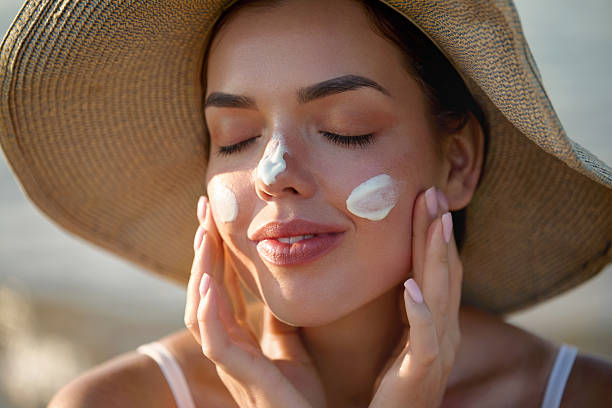
You finish your skincare routine. Your moisturiser feels great. You reach for your sunscreen, the final step before makeup or heading out the door.
Then it happens.
Tiny little rolls begin forming under your fingertips. They gather around your cheeks, hairline, and jaw. Suddenly your smooth sunscreen turns into what looks like pencil eraser shavings.
Annoying? Absolutely.
Confusing? Even more so.
If you’ve ever wondered why sunscreen pills, you’re far from alone. It’s one of the most common complaints dermatologists, beauty editors, and skincare communities hear. The good news is that sunscreen pilling usually isn’t a sign that you’re doing everything wrong. More often, it’s the result of a few products disagreeing with each other, or a small application habit that’s easy to fix.
Let’s break it down.
First things first, what is sunscreen pilling?
Sunscreen pilling happens when the product rolls into tiny flakes or balls instead of settling into an even layer across your skin.
Unlike peeling skin caused by dryness or sunburn, pilling is simply product collecting on the surface. Think of rubbing glue after it’s partly dried. Instead of staying smooth, it starts rolling into little bits.
That’s essentially what’s happening.
Many modern sunscreens contain film-forming ingredients. These ingredients are designed to spread evenly across your skin because that’s how sunscreen protects you from UV rays. When that film gets disturbed before it fully sets, it can bunch together and roll into visible pills.
The science sounds complicated, but the idea isn’t
Here’s an everyday analogy.
Imagine painting a wall.
If you brush over wet paint repeatedly, it starts lifting instead of drying smoothly.
Sunscreen behaves similarly.
Many formulas contain:
- Silicones
- Acrylic polymers
- Film-forming agents
- Mineral particles like zinc oxide or titanium dioxide
- Emollients that help the sunscreen spread evenly
Together, these ingredients create a thin protective shield.
Too much rubbing, layering incompatible products, or applying sunscreen before earlier skincare has settled can break that shield apart before it finishes forming. The result is pilling rather than an even protective film.
So, why does sunscreen pill?
Usually it isn’t one single reason.
It’s more like several small factors stacking up.
Let’s look at the biggest ones.
1. You’re applying products too quickly
Honestly, mornings are busy.
You’ve got coffee brewing, emails already coming in, maybe kids asking where their shoes disappeared to.
Waiting five or ten minutes between skincare layers can feel impossible.
But timing matters.
If your serum or moisturiser is still damp, sunscreen mixes with it instead of sitting on top as intended.
Instead of forming one smooth layer, everything starts sliding around together.
A simple wait of one to several minutes, longer for richer moisturisers, often makes a surprising difference.
2. You’re using too many products
Modern skincare routines can get…ambitious.
Cleanser.
Toner.
Essence.
Vitamin C.
Niacinamide.
Hyaluronic acid.
Moisturizer.
Primer.
Then sunscreen.
That’s a lot happening on one face.
Every extra layer increases the chance that ingredients interact in ways the formulators never intended.
Sometimes simplifying your morning routine fixes pilling without changing your sunscreen at all.
3. Certain ingredients don’t play nicely together
This surprises many people.
Expensive skincare products can still be incompatible.
Water-heavy gels layered beneath silicone-rich sunscreens, or the reverse, sometimes create enough friction to trigger pilling.
Likewise, heavy oils under matte mineral sunscreens can interfere with how the sunscreen film forms.
It doesn’t necessarily mean either product is bad.
They’re simply not the perfect pair.
4. You’re rubbing too much
Here’s the thing.
Most people massage sunscreen into their skin the same way they apply moisturiser.
That isn’t always ideal.
Research found that circular and vigorous rubbing increased pilling more than gentler application methods.
Instead:
- Apply in sections.
- Spread gently.
- Pat lightly if needed.
- Resist the urge to keep rubbing after the sunscreen starts setting.
Less movement often gives a smoother finish.
5. Your skin is drier than you think
This one feels a little backwards.
Wouldn’t oily skin cause more problems?
Actually, research suggests people with lower skin hydration and smoother skin surfaces may experience more pilling.
Dry skin creates a surface where the sunscreen film may not adhere as evenly.
Sometimes improving skin hydration, not adding more products, just using the right moisturiser, reduces pilling significantly.
6. Your sunscreen formula simply isn’t the right fit
Some sunscreens are naturally more prone to pilling.
Mineral sunscreens often contain zinc oxide or titanium dioxide suspended in thicker formulas.
Many matte sunscreens also rely on powders that reduce shine but can increase friction.
That doesn’t mean chemical sunscreens never pill.
They certainly can.
But formula design plays a huge role.
Sometimes switching products solves weeks of frustration.
Does sunscreen pilling mean you’re losing protection?
Unfortunately, yes, at least to some extent.
Sunscreen works by creating an even film across your skin.
If parts of that film roll away into little flakes, you’re no longer getting uniform coverage.
Imagine painting a fence but wiping away random patches before the paint dries.
Those exposed spots aren’t protected.
That’s why experts recommend removing pilled sunscreen and reapplying instead of pretending everything is fine.
How to stop sunscreen from pilling
Thankfully, most fixes are refreshingly simple.
Let each skincare layer settle
Patience isn’t exciting.
But it works.
Even waiting a couple of minutes helps.
Use less product underneath
Remember, sunscreen should be the star of your morning routine.
Your skin doesn’t necessarily need six products before SPF.
Sometimes fewer layers mean better results.
Apply thin skincare layers
Heavy moisturiser isn’t always better.
Several thin applications generally behave better than one thick coat.
Pat instead of rubbing
Think “press.”
Not “scrub.”
Gentle pressure creates less friction.
Check ingredient combinations
If one sunscreen pills every single day while another works beautifully with your routine, you’ve probably found an ingredient mismatch rather than a problem with your technique.
Don’t forget exfoliation
Dead skin cells can contribute to uneven texture, giving sunscreen more opportunities to bunch together.
Gentle exfoliation once or twice weekly may help, assuming it suits your skin type.
Why does sunscreen pill under makeup?
If sunscreen alone behaves well but pills under foundation, the makeup may be part of the story.
Foundation introduces another layer of pigments, silicones, powders, waxes, and polymers.
Sometimes these interact with sunscreen.
Other times, makeup brushes or beauty sponges physically disturb sunscreen before it finishes setting.
A few tips:
- Wait until sunscreen feels dry.
- Apply foundation gently.
- Avoid excessive buffing.
- Use thinner makeup layers where possible.
Interestingly, one published study found that applying foundation after sunscreen reduced visible pilling for many participants, although the outcome depends on the products involved.
How to choose a sunscreen that’s less likely to pill
There isn’t one perfect sunscreen for everyone.
Still, a few characteristics tend to help.
Look for formulas described as:
- Lightweight
- Fast-absorbing
- Fluid or milk textures
- Makeup-friendly
- Non-greasy
- Designed for layering
Many people also find that sunscreens from brands that formulate complete skincare systems work well together because their products are tested in combination.
Still, your own skin matters more than marketing claims.
Myths worth clearing up
“Pilling means the sunscreen is fake.”
Not true.
Even excellent sunscreens can pill if layered incorrectly.
“More rubbing helps it absorb.”
Actually, the opposite is often true.
Excess friction commonly causes pilling.
“It’s just dead skin.”
Sometimes a little dead skin contributes, but most of those little rolls are product, not your skin.
“Expensive sunscreens never pill.”
Price doesn’t guarantee compatibility.
Some luxury sunscreens pill.
Some affordable drugstore formulas apply beautifully.
Formula chemistry matters much more than the price tag.
Frequently Asked Questions
Why does sunscreen pill even without moisturiser?
Some formulas naturally pill because of how their film-forming ingredients behave on your skin. Skin texture, application technique, and the sunscreen formula itself all play a role.
Can I reapply sunscreen after it pills?
Yes. Wipe away the pilled product first, then apply a fresh, even layer so your SPF coverage isn’t patchy.
Does mineral sunscreen pill more?
It can, especially matte mineral formulas, although many newer mineral sunscreens have improved textures. The overall formulation matters more than whether the UV filters are mineral or chemical.
Can oily skin cause sunscreen pilling?
Sometimes, but dry skin, heavy layering, and friction appear to be more common contributors than oil alone.
Should I skip moisturiser?
Not necessarily.
If your sunscreen is moisturising enough, some people can skip moisturiser in the morning. Others, especially those with dry skin, still benefit from using one. The goal is balance, not eliminating products.
Final thoughts
Sunscreen pilling is frustrating, especially when you’re already rushing to work, getting the kids ready, or squeezing skincare into a packed morning.
The encouraging part is that pilling is usually fixable.
A few small changes- waiting an extra minute before layering, using lighter products, applying sunscreen with a gentler touch, or switching to a formula that suits your skin- can make all the difference.
And it’s worth making those changes. Daily sunscreen remains one of the most effective ways to help protect your skin from UV damage, premature aging, and skin cancer. Once your routine works smoothly, applying SPF becomes less of a chore and more of a habit you barely have to think about. That’s exactly where you want it to be.