
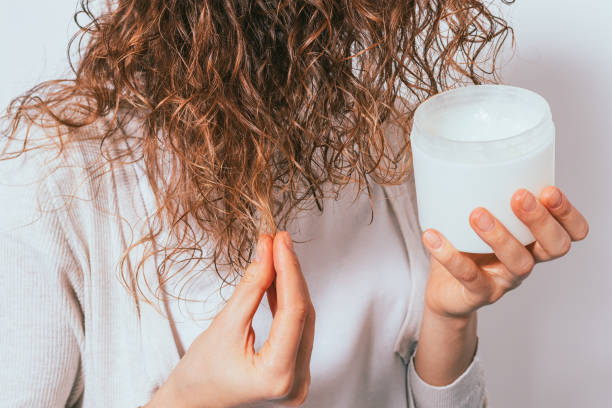
There’s a special kind of betrayal that happens when you spend 30 minutes styling your hair, step outside into humid air, and watch the whole thing slowly expand.
The smooth blowout? Gone.
The sleek ponytail? Suddenly fuzzy.
Those carefully defined curls? Either puffing up or losing their shape.
If you live somewhere hot and humid, you know the routine. You leave the house looking polished, then the weather seems to have its own agenda. And for busy women juggling lectures, meetings, school runs, errands, deadlines, and everything else on the calendar, spending half the morning fighting frizz simply isn’t practical.
The good news? Humidity doesn’t have to win.
Preventing frizz in humidity is less about finding one miracle product and more about changing a few small parts of your hair routine. Think of it as project management for your hair: reduce the things that make frizz worse, protect the hair before moisture gets in, and use products that help keep the surface of each strand smooth.
And honestly, you don’t need a bathroom shelf packed with 17 products to do it.
Here’s what actually helps.
First, why does humidity make hair frizzy?
Let’s start with the science, because once you understand what humidity is doing, your hair routine suddenly makes much more sense.
Hair is affected by water. The keratin fibres inside the hair contain hydrogen bonds that help influence the hair’s temporary shape. When hair gets wet, these bonds are disrupted. As the hair dries, they form again and help hold the new shape. Humidity adds water vapour to the equation, which can interfere with that carefully arranged structure.
That’s why your straightened hair may start bending or curling when the air is damp. And it’s also why naturally curly or wavy hair can become bigger, puffier, or less defined.
There’s another piece of the puzzle: the outer cuticle.
Healthy hair has overlapping cuticle layers that act a little like roof shingles. When the surface is smooth, light reflects more evenly, which gives hair that glossy look. When the cuticle becomes rough or raised, hair can look dull and feel coarse. Damaged or dry hair can also be more vulnerable to frizz because its surface isn’t as smooth.
So humidity isn’t necessarily the villain.
It’s more like the person who walks into a room and immediately notices every little thing that was already out of place.
If your hair is dry, damaged, porous, over-processed, or already rough, humid weather can make those problems much more obvious.
1. Start with conditioner — and actually use enough
If your goal is preventing frizz in humidity, don’t treat conditioner as an optional extra.
Shampoo cleans the hair. Conditioner helps improve manageability and smoothness.
That difference matters.
A good conditioner can reduce friction between strands and help the hair feel smoother and easier to comb. Conditioning ingredients can also form a coating over the hair, which may help reduce moisture exchange and improve the feel of the cuticle. Silicones, for example, are widely used in hair products because they can form films that reduce friction, improve shine, and help limit moisture loss.
You don’t have to fear the word “silicone,” either.
Hair care has become full of ingredient drama. One week an ingredient is a miracle; the next week it’s supposedly ruining everyone’s hair. Reality is usually less dramatic.
The right formula depends on your hair type, how often you wash, how much buildup you experience, and what finish you like.
If your hair is thick, dry, curly, coarse, or chemically treated, a richer conditioner may be useful.
If your hair is fine, look for a lighter formula so you can smooth the lengths without making your roots limp.
And here’s a simple trick: focus conditioner from the mid-lengths to the ends if your scalp becomes oily quickly. Your ends are older hair and often need more help than your roots.
2. Don’t walk outside with soaking-wet hair
This one is easy to overlook.
You shower, wash your hair, get dressed, grab your bag, and rush out the door because you’re already late.
Then you wonder why your hair seems determined to become a cloud.
Hair is most vulnerable to mechanical stress when it’s wet. And wet hair is already interacting heavily with water, so taking freshly washed, dripping strands into a very humid environment isn’t exactly the smoothest setup.
You don’t need to dry your hair bone-dry before leaving home. But try to give it enough time to become mostly dry, especially if you plan to wear it straight or in a carefully shaped style.
If you’re blow-drying, use a heat protectant and keep the airflow controlled.
If you’re air-drying curls or waves, avoid constantly touching and rearranging them while they dry. That can disturb the pattern and encourage frizz.
For busy mornings, this is where planning beats perfection.
Wash your hair the evening before when possible. Let it dry while you sleep or style it when you have more time. Your future, less-frantic self will thank you.
3. Use a microfiber towel instead of aggressively rubbing your hair
We’ve all done it.
Hair dripping.
Towel grabbed.
Rub, rub, rub.
Done.
Except that vigorous towel drying can create friction, rough up the hair surface, and leave your strands looking frizzier before styling even begins.
Instead, gently squeeze excess water from your hair.
Then use a microfiber towel or a soft cotton T-shirt to blot and wrap the hair without rough scrubbing.
This is especially helpful for curly and textured hair, where excessive friction can disturb the natural pattern.
Think less “dry my hair as fast as possible” and more “remove water without starting a wrestling match.”
Small difference. Big payoff.
4. Don’t brush dry curls just because they look a little messy
If you have waves, curls, or coils, your approach to frizz needs to be slightly different.
Brushing dry textured hair can separate the curl pattern and make individual strands stand apart. The result may look larger and fuzzier, even when your hair itself is perfectly healthy.
Instead, detangle gently when the hair is damp and coated with conditioner or a suitable leave-in product.
Use your fingers, a wide-tooth comb, or a brush designed for your hair type.
Then let your texture do its thing.
This is one of those areas where “smooth” doesn’t have to mean “straight.”
A defined curl can have volume. A little halo of texture isn’t a personal failure. And healthy textured hair doesn’t need to look pressed flat against your head.
The goal is control, not perfection.
5. Add a leave-in conditioner when your hair needs extra help
If regular conditioner isn’t enough, a leave-in product can give your hair another layer of softness and protection.
This can be particularly useful for:
- Dry or coarse hair
- Curly and wavy hair
- Colour-treated hair
- Heat-styled hair
- Long hair with dry ends
- Hair that tangles easily
Apply a small amount through damp lengths and ends.
Start with less than you think you need.
You can always add more. Trying to rescue over-applied product after your hair turns heavy and greasy is a different kind of Monday morning problem.
Look for leave-in products that offer conditioning and smoothing benefits. Some formulas contain silicones, polymers, oils, proteins, or combinations of these ingredients.
There’s no universal “perfect” ingredient list. Your hair gets the final vote.
6. Use an anti-humidity styling product before leaving home
If humidity is a regular feature of your climate, consider making an anti-frizz or anti-humidity styling product part of your routine.
These products can work in different ways, depending on their formula. Some create a film around the hair, some smooth the surface, and others help with styling hold.
Silicones are common in smoothing products because they can reduce friction and create a smoother coating over the hair. Research on hair-care silicones also notes their conditioning and protective properties, although certain formulas can contribute to buildup when used heavily.
Some modern styling products also use polymers and film-forming ingredients designed to improve humidity resistance.
You may see claims such as:
- Anti-humidity
- Humidity shield
- Frizz control
- Smoothing
- Weather protection
- Long-lasting style
Those claims can be useful, but don’t assume every product performs identically.
If a product works well for your hair, great. If it leaves your hair sticky, stiff, heavy, or greasy, it’s simply not the right match.
Hair care isn’t a loyalty program.
You’re allowed to switch products.
7. Be careful with glycerin and other humectants, but don’t panic
This is where hair-care advice can get confusing.
You’ll often hear that humectants such as glycerin are “bad” in humid weather because they attract water.
That explanation is too simplistic.
Humectants help attract and hold water, and their effect can depend on the whole formulation, the surrounding environment, and your individual hair. Simply seeing glycerin high on an ingredient list doesn’t automatically mean your hair will become frizzy.
So don’t start throwing away every product containing glycerin.
Instead, pay attention to what happens to your own hair.
If a particular product consistently makes your hair swell, feel sticky, or lose definition in very humid weather, try a different formula. You may prefer products that focus more heavily on smoothing and film-forming ingredients during the most humid months.
Think of your hair products as a team.
One ingredient rarely tells the entire story.
8. Don’t skip heat protectant
Heat styling and humidity can feel like unrelated issues, but they’re connected.
If you regularly use a blow dryer, flat iron, or curling iron, heat protection should be part of your routine.
Why?
Because damaged hair tends to be harder to manage. The smoother and healthier the hair surface, the easier it is to create a polished style.
A heat protectant can help reduce the stress associated with heat styling, depending on the formula and how it’s used.
And please don’t turn the temperature to maximum because you’re running late.
Your flat iron doesn’t get a performance bonus for reaching volcanic temperatures.
Use the lowest effective heat setting, keep the tool moving, and avoid repeatedly passing over the same section.
9. Dry your hair completely before using a flat iron
This deserves its own section because it’s such a common mistake.
Never use a traditional flat iron on damp hair.
Hair should be properly dry before heat styling with a straightener or curling iron unless the tool is specifically designed for wet-to-dry use.
If you want a smooth finish, blow-dry the hair first using controlled tension and a suitable brush.
Then, once the hair is fully dry, use your styling tool.
This can make the finished style smoother and more consistent, and you won’t need to keep going over the same section again and again.
That matters when you’re trying to preserve your hair rather than simply win a battle with it.
10. Finish with a tiny amount of serum or hair oil
Here’s where restraint matters.
A few drops of a smoothing serum or lightweight hair oil can help tame flyaways and add shine. The trick is to use a tiny amount and apply it mainly to the lengths and ends.
Warm the product between your palms.
Then smooth it over the surface.
Don’t pour half the bottle into your hand because your hair “looks dry.” More product doesn’t always mean more moisture or more protection.
For fine hair, start with one drop.
For thick or coarse hair, you may need more.
If your hair looks oily rather than glossy, you’ve crossed the line.
It happens.
11. Sleep on silk or satin when it suits your hair
Your pillowcase may not be the main cause of humidity frizz, but nighttime friction can certainly contribute to roughness and tangling.
Silk or satin pillowcases create a smoother surface than many traditional cotton fabrics. A satin bonnet or scarf can also help protect curls, coils, and textured styles overnight.
This is particularly useful if you wake up with:
- Flattened curls
- Tangled ends
- Dry-feeling hair
- Lots of flyaways
- A style that looks completely different in the morning
And if you’re a busy mom who doesn’t have time for a full wash-and-style routine every day, nighttime protection can be surprisingly useful.
Less morning repair work is still a win.
12. Keep your hands out of your hair
This sounds almost too simple.
But think about how often you touch your hair during the day.
You adjust your fringe.
Push your hair behind your ear.
Smooth the top.
Fluff your curls.
Run your fingers through the ends.
Then do it again.
And again.
Every time you touch your hair, you can disturb the shape, transfer oils, and create friction.
When humidity is already encouraging your hair to change shape, constant touching can make things worse.
Style it.
Set it.
Then leave it alone.
This is especially important for curls. Once your curls are dry and defined, excessive touching can break apart the pattern and create a fluffy finish.
13. Choose hairstyles that work with the weather
Sometimes the smartest anti-frizz strategy isn’t fighting humidity.
It’s working around it.
On particularly muggy days, try hairstyles that are naturally forgiving.
A low bun can look polished without requiring every strand to be perfectly flat. A braid can turn humidity-prone texture into part of the style. A claw-clip twist is quick, practical, and surprisingly chic.
For curly hair, defined curls, a puff, pineapple, half-up style, or protective hairstyle can make more sense than trying to force every strand straight.
This is especially useful for students and working women.
If you have a presentation at 9 a.m., a commute at 8, and rain clouds gathering outside, perhaps today isn’t the day to attempt a glass-like blowout.
Sometimes good beauty strategy is knowing when to change the brief.
14. Protect your hair from rain and excessive moisture
Humidity is one thing.
Rain is another.
If the forecast looks questionable, carry a compact umbrella and consider keeping a few emergency hair tools in your bag.
A small anti-frizz serum, a soft scrunchie, a claw clip, or a few pins can turn a potential bad-hair afternoon into a quick restyle.
For commuters, this little kit can be worth its weight in gold.
Especially if you’re going straight from work to dinner, class to an event, or school pickup to somewhere you actually want to look put together.
You don’t need a full salon in your handbag.
Just a backup plan.
15. Don’t over-wash your hair trying to remove every trace of frizz
Here’s a strange contradiction: sometimes washing your hair more because it feels frizzy can make the situation worse.
If frequent washing leaves your hair dry or rough, you may notice even more puffiness afterwards.
Your ideal washing schedule depends on your scalp, hair texture, lifestyle, exercise routine, and product use. Someone who works out every morning may need a different routine from someone with dry, tightly coiled hair.
There’s no universal number of wash days.
Instead, aim for a clean scalp and comfortable hair without stripping your lengths unnecessarily.
And if you use a lot of styling products, an occasional clarifying wash may help remove buildup. How often you need one depends on the products you use and how your hair responds.
Again: your hair gets the final vote.
16. Get regular trims if your ends are constantly frizzing
Sometimes what looks like “humidity frizz” is simply hair that needs a little maintenance.
Split or damaged ends can make the bottom section of your hair look fuzzy and uneven. A trim won’t permanently prevent frizz, but removing damaged ends can make hair look cleaner and easier to style.
If your ends tangle constantly, feel rough even after conditioning, or seem to split quickly, consider talking with a professional stylist about your trimming schedule.
You don’t need to chop off half your hair.
A small maintenance trim can be enough.
17. Give your hair a break from constant heat and chemical processing
This is perhaps the least exciting advice, which usually means it’s worth hearing.
If you straighten, bleach, colour, relax, perm, or otherwise chemically process your hair, it may need more conditioning and gentler handling.
You don’t have to give up your favourite style.
But consider alternating high-heat days with lower-manipulation styles. Use protective products. Avoid stacking several harsh processes too close together. And pay attention when your hair starts feeling unusually brittle.
Frizz is sometimes a styling problem.
Sometimes it’s a hair-health problem wearing a tiny disguise.
A simple anti-frizz routine for busy mornings
If you’re standing in front of the mirror at 7:15 a.m. thinking, “Okay, but what am I actually supposed to do?” keep it simple.
For straight or blow-dried hair
- Wash and condition based on your hair’s needs.
- Gently blot excess water.
- Apply a heat protectant.
- Add a small amount of smoothing leave-in if needed.
- Blow-dry completely using controlled airflow.
- Finish with a humidity-resistant styling product.
- Add a tiny amount of serum to the ends.
- Avoid touching the hair once it’s styled.
For waves and curls
- Cleanse and condition gently.
- Detangle while damp.
- Apply leave-in conditioner if needed.
- Add your curl cream or styling product.
- Scrunch gently.
- Allow the curls to dry without excessive touching.
- Once completely dry, use a tiny amount of serum on the ends if needed.
- Refresh only the areas that actually need it.
Notice what isn’t on the list?
Ten layers of product.
More isn’t automatically better.
What about hair masks?
A weekly or occasional deep-conditioning treatment can be useful when your hair feels dry, rough, or difficult to manage.
But don’t assume every frizz problem requires a heavy mask.
If your hair is fine or easily weighed down, too much rich product can leave it flat and greasy. If your hair is very dry or textured, a richer treatment may feel fantastic.
Think about what your hair is asking for.
Is it dry?
Is it tangled?
Is it breaking?
Is it limp?
Is there product buildup?
Is it simply reacting to 90% humidity?
Different problems need different responses.
The humidity-proof haircare ingredient cheat sheet
When shopping, you don’t need to memorise a chemistry textbook. But a few ingredient categories are useful to understand.
Silicones
Ingredients such as dimethicone and amodimethicone are common in smoothing and conditioning formulas. They can reduce friction, improve slip, add shine, and form a coating over the hair.
They aren’t automatically “bad.” If they work for your hair, use them.
Film-forming polymers
Some styling products use polymers designed to create a flexible film around the hair. These can help hold a hairstyle and improve resistance to environmental moisture.
Oils
Lightweight oils can smooth the hair surface and add shine. They’re especially useful on dry ends, although too much can make fine hair limp.
Conditioning agents
Conditioners contain ingredients designed to improve softness, detangling, and manageability. Don’t underestimate the boring-looking conditioner bottle sitting next to the shampoo.
It may be doing more work than your flashy serum.
What not to do when humidity hits
When the air is thick and your hair starts misbehaving, avoid making the situation worse with frantic styling.
Try not to:
- Keep brushing your hair every 20 minutes
- Layer several heavy oils over already oily hair
- Flat-iron the same section repeatedly
- Use excessive heat to “seal” the style
- Scrub wet hair with a rough towel
- Pull tightly on wet strands
- Add product every time you see one flyaway
- Change your entire routine every time the weather changes
One frizzy afternoon doesn’t mean your entire hair-care routine is failing.
Sometimes the weather is simply the weather.
And if your hair still frizzes?
This is important.
You may do everything “right” and still have some frizz.
That doesn’t mean you’ve failed.
Hair is not plastic. It responds to temperature, moisture, friction, damage, texture, styling, and genetics. Curly and coily hair, in particular, can naturally have more visible variation along the strand.
A little texture is normal.
A little volume is normal.
A few flyaways are normal.
The goal of preventing frizz in humidity isn’t to make every strand behave like it’s been digitally edited. It’s to make your hair easier to manage, healthier-looking, and more predictable when the weather gets sticky.
That’s a much more realistic goal.
Your low-stress humidity hair strategy
If you only remember five things, make them these:
Condition well. Give your hair enough slip and softness to reduce roughness and friction.
Dry gently. Blot rather than aggressively rubbing, and avoid leaving the house with soaking-wet hair when possible.
Protect before styling. Use heat protectant and appropriate smoothing products if you blow-dry or heat-style.
Use humidity-resistant products strategically. A smoothing serum, anti-humidity spray, or suitable styling cream may help create a barrier and keep your style more stable.
Stop chasing perfection. Humidity changes hair. Some movement, texture, and volume are completely normal.
And that last one might be the most useful.
Because something is exhausting about constantly trying to make your hair behave in conditions it was never designed to ignore.
So, when the forecast says humid, change the strategy. Condition a little better. Style a little smarter. Keep a tiny emergency kit in your bag. Choose a braid or bun when a blowout would be a headache. Give your hair fewer reasons to fight back.
Then walk outside.
Let the air be warm.
Let your hair have a little personality.
And get on with your day.