Everyone wants healthy, glowing skin. That’s nothing new. But here’s something many people overlook: what you eat every single day often has a bigger effect on your skin than another expensive cream sitting on your bathroom shelf.
Think about it for a moment. Your skin is your body’s largest organ. It’s constantly repairing itself, producing new cells, fighting off environmental damage, and trying to stay hydrated. That takes fuel. And where does that fuel come from? Your diet.
The truth is, no single food can erase wrinkles overnight. If someone promises that, they’re selling hope, not science. But eating the right foods consistently can help your skin stay smoother, firmer, brighter, and more resilient over time.
Whether you’re a busy professional grabbing lunch between meetings, a university student living on a budget, or a mom trying to prepare healthy meals for the whole family, small dietary changes can make a noticeable difference.
Let’s look at the foods that dermatologists and nutrition experts regularly recommend for youthful-looking skin, and why they work.
Can Food Really Slow Skin Aging?
Yes, but perhaps not in the way social media makes it sound.
Skin ages because of two main factors:
- Intrinsic aging (your natural biological aging)
- Extrinsic aging caused by sunlight, pollution, smoking, poor sleep, stress, and unhealthy eating
You can’t stop time. Nobody can.
However, you can give your skin the nutrients it needs to repair damage more efficiently. Think of your skin like a brick wall. Collagen forms much of the structure, healthy fats act like mortar, antioxidants protect the bricks, and vitamins help repair cracks before they become bigger problems.
When those nutrients are missing, the wall becomes weaker.
The Nutrients Your Skin Loves Most
Before talking about specific foods, it helps to understand what your skin actually needs.
Vitamin C
Vitamin C is essential for collagen production. It also helps protect skin from free radicals generated by UV rays and pollution.
Vitamin E
This antioxidant protects skin cells from oxidative damage and works particularly well alongside vitamin C.
Omega-3 Fatty Acids
Healthy fats help maintain the skin barrier, keeping moisture inside while reducing inflammation.
Protein
Collagen, elastin, and keratin all require amino acids from dietary protein.
Zinc
Supports wound healing and helps regulate inflammation.
Selenium
Protects skin cells from oxidative stress.
Polyphenols
These powerful plant compounds help reduce inflammation and support healthy aging.
18 Best Foods for Younger Looking Skin
1. Avocados
Creamy, filling, and surprisingly good for your skin.
Avocados contain monounsaturated fats that help maintain skin elasticity while providing vitamin E, vitamin C, and carotenoids.
Regularly eating healthy fats can also reduce dry, flaky skin.
Try them:
- On whole-grain toast
- In salads
- Blended into smoothies
- Mashed into guacamole
2. Salmon
If there were a “superfood” for skin, salmon would be close.
It’s rich in omega-3 fatty acids, high-quality protein, selenium, and astaxanthin, a naturally occurring antioxidant that may help reduce skin damage caused by UV exposure.
Eating oily fish two or three times each week can support smoother, healthier-looking skin.
3. Blueberries
Tiny? Yes.
Powerful? Absolutely.
Blueberries are packed with anthocyanins, antioxidants that help protect collagen from oxidative stress.
They’re also rich in vitamin C.
Add them to:
- Greek yogurt
- Oatmeal
- Smoothies
- Fruit salads
4. Sweet Potatoes
The orange colour comes from beta-carotene.
Your body converts beta-carotene into vitamin A, which supports healthy skin cell turnover and acts as a natural defence against sun damage.
No, it doesn’t replace sunscreen. That’s an important distinction.
But it does provide another layer of nutritional support.
5. Tomatoes
Cooked tomatoes are especially rich in lycopene.
Lycopene has been studied for its ability to help protect skin against UV-related damage and improve skin texture over time.
Interestingly, cooking tomatoes actually increases lycopene availability.
Pasta sauce suddenly sounds even better.
6. Walnuts
Walnuts offer a unique combination of:
- Omega-3 fats
- Zinc
- Vitamin E
- Protein
That’s quite a package for one handful.
They’re also convenient for students and busy professionals who need portable snacks.
7. Green Tea
Honestly, this one deserves the attention it gets.
Green tea contains catechins, plant compounds that may improve skin hydration, elasticity, and blood flow.
Replacing one sugary drink each day with green tea can benefit both your skin and your overall health.
8. Bell Peppers
Especially the red and yellow varieties.
They’re loaded with vitamin C, often providing more than oranges.
Since collagen production depends heavily on vitamin C, these colourful vegetables deserve a regular place on your plate.
9. Spinach
Leafy greens rarely get the spotlight, yet they’re nutritional workhorses.
Spinach provides:
- Vitamin A
- Vitamin C
- Vitamin E
- Folate
- Iron
- Lutein
Together, these nutrients support healthy skin renewal.
10. Eggs
Eggs contain protein, biotin, selenium, and lutein.
Protein supports collagen production, while lutein may improve skin hydration and elasticity.
They’re also affordable, a bonus for students.
11. Citrus Fruits
Oranges, grapefruits, lemons, and mandarins provide plenty of vitamin C.
This vitamin is essential because your body cannot produce it on its own.
Fresh citrus also contributes hydration.
12. Pumpkin Seeds
Don’t underestimate these little seeds.
They’re rich in zinc, magnesium, healthy fats, and antioxidants.
Zinc plays an important role in tissue repair and controlling inflammation.
13. Dark Chocolate (70% Cocoa or Higher)
Here’s the thing.
Not all chocolate is created equal.
Dark chocolate contains flavonoids that may improve blood flow to the skin while reducing oxidative stress.
Moderation matters, though.
A small square beats an entire family-sized bar.
14. Greek Yoghurt
Healthy skin starts in the gut more often than people realise.
Greek yoghurt provides:
- Protein
- Calcium
- Probiotics
Emerging research suggests that a balanced gut microbiome may influence skin health through reduced inflammation.
15. Pomegranates
These colourful fruits contain punicalagins and anthocyanins.
Both compounds help protect collagen while supporting skin repair.
They also make almost any salad look more appealing.
16. Carrots
Like sweet potatoes, carrots provide beta-carotene.
They’re easy to snack on and incredibly versatile.
Roasted, raw, steamed, it all counts.
17. Extra Virgin Olive Oil
A cornerstone of the Mediterranean diet.
Olive oil supplies healthy monounsaturated fats and polyphenols that may help reduce chronic inflammation linked with premature aging.
Use it:
- Over vegetables
- In salad dressings
- For light cooking
18. Watermelon
Hydration matters more than many people think.
Watermelon contains:
- Water
- Vitamin C
- Lycopene
It’s especially refreshing during warmer months.
Foods That May Make Skin Age Faster
It’s not only about adding healthy foods.
Sometimes it’s equally important to reduce foods that contribute to inflammation and collagen breakdown.
These include:
- Sugary soft drinks
- Highly processed snacks
- Deep-fried foods
- Excess alcohol
- Processed meats
- Excess refined carbohydrates
- Frequent high-sugar desserts
This doesn’t mean you can never enjoy pizza or birthday cake.
Healthy eating is about patterns, not perfection.
One indulgent meal won’t ruin your skin. Likewise, one salad won’t erase years of poor habits.
Consistency wins.
A Sample One-Day Skin-Friendly Menu
Need inspiration?
Breakfast
Greek yoghurt with blueberries, walnuts, and chia seeds.
Mid-Morning Snack
Orange slices and pumpkin seeds.
Lunch
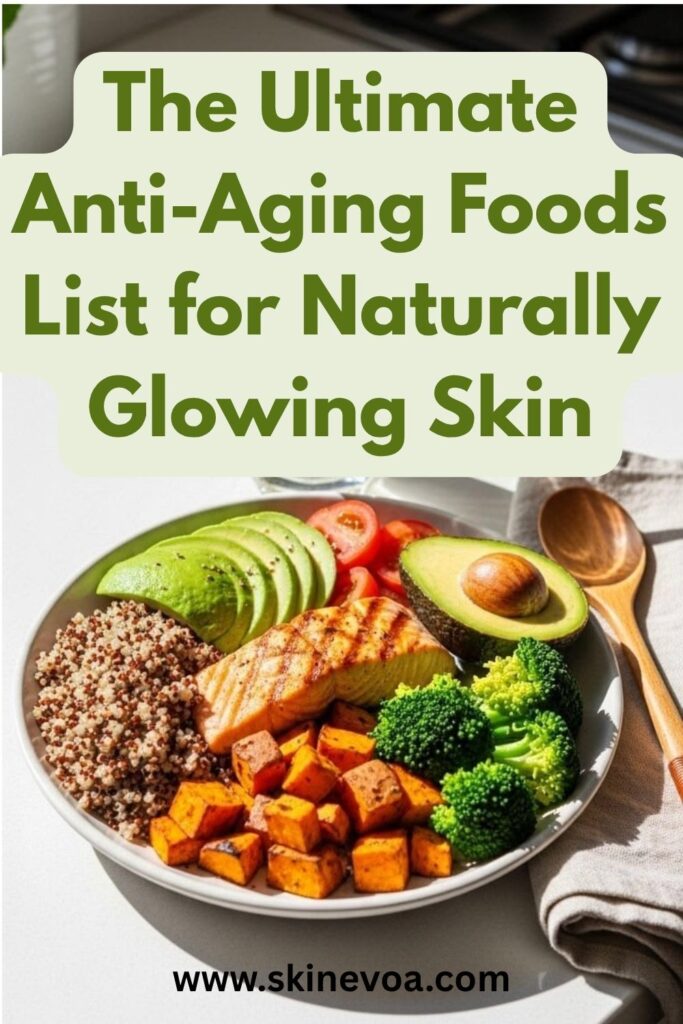
Grilled salmon with quinoa, spinach, tomatoes, and avocado.
Afternoon Snack
Green tea and a small piece of dark chocolate.
Dinner
Grilled chicken, roasted sweet potatoes, broccoli, and olive oil dressing.
Evening
Water or herbal tea.
Simple. Balanced. Realistic.
Your Lifestyle Matters, Too
Food is only one piece of the puzzle.
You could eat perfectly and still struggle with premature aging if you regularly skip sleep, spend hours in the sun without protection, or smoke.
Some habits make your healthy diet work even harder:
- Wear broad-spectrum sunscreen every day.
- Sleep seven to nine hours each night.
- Stay physically active.
- Drink enough water.
- Avoid smoking.
- Manage stress through exercise, meditation, prayer, journaling, or time outdoors.
- Follow a consistent skincare routine with a gentle cleanser, moisturiser, and sunscreen.
These habits reinforce one another. Think of them as teammates rather than separate strategies.
Frequently Asked Questions
Which fruit is best for younger-looking skin?
Blueberries, oranges, pomegranates, kiwi, strawberries, and watermelon are excellent choices because they provide antioxidants, vitamin C, and hydration.
Can food remove wrinkles?
No.
Food cannot erase existing wrinkles, but it can support collagen production, reduce inflammation, and help slow visible skin aging over time.
How long does it take to see results?
Most people notice improvements in skin hydration and overall appearance after several weeks of consistently eating a nutrient-rich diet. Changes in skin firmness and texture generally take longer, often a few months, depending on overall health, skincare habits, and lifestyle.
Are supplements better than food?
Usually not.
Whole foods provide vitamins, minerals, fibre, healthy fats, and plant compounds that work together. Supplements may be useful for people with diagnosed deficiencies, but they shouldn’t replace a balanced diet unless recommended by a healthcare professional.
Is collagen powder necessary?
Not necessarily.
Collagen supplements may help some people improve skin elasticity and hydration, but your body also needs enough protein, vitamin C, zinc, and copper to build collagen naturally. A nutritious diet remains the foundation.
Final Thoughts
Looking younger isn’t about chasing the latest trend or filling your kitchen with expensive “superfoods.” It’s about giving your skin what it needs, day after day, meal after meal.
A colourful plate filled with fruits, vegetables, healthy fats, lean proteins, whole grains, and plenty of water can support stronger collagen, better hydration, and a healthier skin barrier. Those changes won’t happen overnight, but they do add up.
If there’s one takeaway, let it be this: beautiful skin is built over time. A thoughtful diet, daily sun protection, regular sleep, and a simple skincare routine work together far better than any single miracle product.
Start with one small change this week: swap a sugary snack for blueberries and walnuts, add spinach to your lunch, or choose salmon for dinner. Your skin may not thank you tomorrow, but a few months from now, you’ll likely be glad you started.