
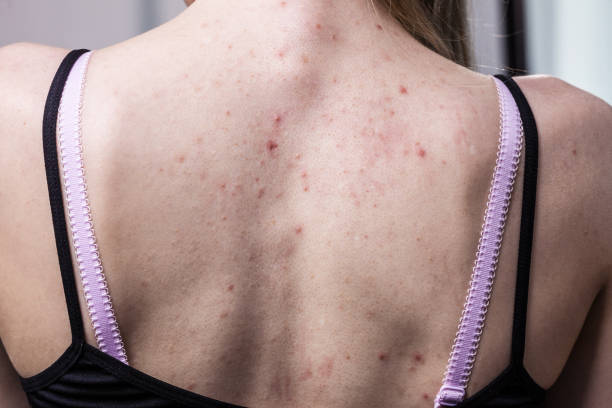
You leave the house with clear skin. A few hours later, your forehead is shiny, your face feels sticky, and somehow there’s a new pimple sitting right where you absolutely did not invite it.
Sound familiar?
If your acne seems to get worse when the weather turns hot, you’re not imagining it. Heat and humidity can create a perfect storm for breakouts. More sweating, increased oil on the skin, friction from clothing or hats, heavier products, and changes in your daily routine can all play a part.
And no, sweat itself isn’t necessarily the villain.
The problem is what happens when heat, sweat, oil, dead skin cells, bacteria, friction, and product buildup start working together. When pores become blocked, inflammation can follow, which is how those annoying little bumps and pimples can appear. High humidity is also recognised as a factor that can worsen acne for some people.
For students rushing between classes, professionals commuting to work, busy moms running errands, or anyone spending long hours outdoors, hot-weather acne can feel especially frustrating. You may not have time for a complicated 12-step skincare routine.
Good news: you probably don’t need one.
Let’s look at why hot weather can trigger acne and what you can realistically do about it.
So, why does hot weather make me break out?
Think of your skin as a busy office.
Your pores are the little workstations. Sebum, the natural oil produced by your skin, helps keep everything lubricated. Sweat helps cool you down. Dead skin cells are constantly being shed.
Most days, the system runs quietly in the background.
Then the temperature climbs.
You sweat more. Your skin may feel oilier. Humidity makes sweat evaporate less easily. Sunscreen, makeup, moisturiser, hair products, and other skincare can sit on the skin. Add a tight hat, helmet, face mask, sweaty workout clothes, or repeated rubbing with a towel, and suddenly your pores have a lot more to deal with.
A clogged pore can become a whitehead or blackhead. If inflammation develops, it may become a red, swollen pimple.
That’s why hot-weather acne isn’t usually caused by one single thing. It’s more like several small triggers piling onto one another.
1. You sweat more
Sweating is a completely normal and useful process. Your body produces sweat to help regulate temperature, and when sweat evaporates from the skin, it helps cool you down.
But when you’re sweating heavily, especially in humid weather, your skin can stay damp for longer.
That matters because sweat can mix with oil, dead skin cells, makeup, sunscreen, and skincare products. If your pores are already prone to clogging, that combination can make breakouts more likely.
This is especially noticeable after:
- A workout
- Walking outdoors in hot weather
- Long commutes
- Outdoor work
- Sports
- Running errands
- Wearing a helmet or hat
- Spending hours in a warm classroom or office
So if you come home after a sweaty day and notice tiny bumps across your forehead or cheeks, your skin may simply be reacting to the combination of heat, moisture, friction, and buildup.
2. Humidity can make your skin feel oilier
Hot weather and humidity often go together.
When the air is humid, sweat doesn’t evaporate as easily. That can leave your skin feeling damp, sticky, or greasy for longer. Humidity is also associated with acne flare-ups in some people.
And here’s the annoying part: your skin can feel oily on the surface while still becoming irritated underneath.
That can tempt you to wash your face repeatedly or scrub harder.
But more cleansing isn’t automatically better.
Aggressive washing, harsh scrubs, alcohol-heavy products, and constant rubbing can irritate the skin and make acne management harder. The American Academy of Dermatology recommends gentle cleansing and avoiding irritating habits that can worsen breakouts.
In other words, your face doesn’t need to be squeaky clean.
It needs to be comfortable and balanced.
3. Heat can increase the “sticky skin” effect
You know that feeling when your forehead almost seems to have its own weather system?
That sticky feeling comes from a mix of sweat, oil, humidity, and products sitting on the skin.
During hot months, you might also change your skincare routine without realising it. Perhaps you use a richer moisturiser because your skin feels dry after air conditioning. Maybe you apply sunscreen more often. You may add makeup on top because you’re heading to work after your morning skincare.
None of these things is inherently bad.
But if several layers are heavy or pore-clogging, your acne-prone skin may not be thrilled.
That’s why the American Academy of Dermatology suggests choosing products labelled “non-comedogenic,” “oil-free,” or “won’t clog pores” when you’re prone to acne.
4. Sunscreen can be part of the problem, but don’t stop wearing it
This one confuses.
You apply sunscreen because you’re protecting your skin. Then you notice more bumps and think, “Well, that’s it. I’m done with sunscreen.”
Please don’t make that trade.
Sun protection remains important, including for acne-prone skin. The better move is to choose a sunscreen that is broad-spectrum, SPF 30 or higher, water-resistant when appropriate, and non-comedogenic.
You may also need to simplify the layers underneath it.
For example, on a very hot day, you might not need a rich cream, facial oil, primer, foundation, and several other products beneath your sunscreen.
A lighter routine can feel much better.
Try thinking of your morning skincare like a workday schedule: everything should have a reason for being there. If five products are doing roughly the same job, your skin may appreciate a little editing.
5. Your workout may be triggering “acne mechanica”
Ever notice bumps where your sportswear, helmet, headband, backpack strap, or chin strap rubs?
That may be acne mechanica.
The American Academy of Dermatology explains that this type of acne can develop when equipment or clothing traps heat and sweat against the skin while friction irritates the area.
It can happen around the:
- Forehead
- Chin
- Jaw
- Shoulders
- Chest
- Back
- Neck
This is especially relevant if you exercise regularly in hot weather.
A tight workout top, sweaty sports bra, helmet, or headband can trap heat against your skin. Add repeated movement and rubbing, and the area becomes more irritated.
The fix isn’t to stop exercising.
Instead, look at what is touching your skin.
Breathable, moisture-wicking clothing can help. Looser clothing may reduce friction. And changing out of sweaty clothes after exercise can keep sweat from sitting against your skin for hours.
6. Touching and wiping your face can make things worse
This one is incredibly easy to overlook.
When you’re hot, you naturally want to wipe your forehead. Maybe you use your palm. Maybe you grab a sleeve. Maybe you repeatedly swipe your face with a towel.
But constant rubbing can irritate acne-prone skin.
The American Academy of Dermatology recommends blotting sweat gently with a clean towel or cloth rather than repeatedly rubbing the skin.
It’s a tiny habit, but tiny habits add up.
If you’re sitting at your desk, commuting, or chasing children around the house, keep a clean soft cloth nearby. Gently press it against sweaty areas rather than scrubbing.
Your skin doesn’t need a wrestling match.
7. Hair products may be sneaking onto your forehead
Hot weather can also make hair products more noticeable.
Hair oils, pomades, styling creams, leave-in conditioners, and other products can transfer onto the forehead, temples, neck, and upper back.
If you already have acne-prone skin, that transfer may contribute to clogged pores.
This can be particularly obvious if your breakouts cluster around the hairline.
Try keeping heavier hair products away from the face and washing your pillowcase regularly. If you sweat heavily at night, changing pillowcases more often may also be worth trying.
It’s not glamorous advice.
It is practical advice.
Is it acne, sweat pimples, or heat rash?
Not every bump that appears in hot weather is acne.
This distinction matters because different skin problems can look surprisingly similar.
Regular acne
Acne develops when hair follicles become clogged with oil, dead skin cells, and other material. Inflammation can then create pimples, whiteheads, blackheads, or deeper lesions.
Acne can occur throughout the year, but hot and humid conditions may make it worse.
Acne mechanica
This tends to appear in places where heat, sweat, pressure, and friction occur together.
Think:
helmet + sweat + friction = forehead or chin bumps
Or:
tight workout clothing + heat + rubbing = chest, shoulder, or back breakouts.
Heat rash
Heat rash is different.
It happens when sweat becomes trapped in the skin and sweat ducts, causing small itchy bumps or a prickly sensation. It’s common in hot, humid environments.
If your bumps are intensely itchy and appeared after prolonged heat exposure, it may not be ordinary acne.
And that’s worth knowing because treating every hot-weather bump as acne can lead to unnecessary irritation.
What should I do when I get acne in hot weather?
You don’t need to panic and replace your entire bathroom shelf.
Start with the basics.
Step 1: Cleanse gently
Wash your face with a gentle cleanser, particularly after sweating.
The goal is to remove sweat, oil, sunscreen, makeup, and daily grime without leaving your skin tight and uncomfortable.
The American Academy of Dermatology recommends washing after exercising or sweating and using warm rather than very hot water.
If you have a packed schedule, this can be simple.
Morning: cleanse.
After a sweaty workout: cleanse or shower.
Evening: cleanse and remove makeup.
That’s already a strong foundation.
Step 2: Don’t scrub your face raw
A rough scrub can feel satisfying when your skin feels greasy.
But irritation isn’t the same thing as cleanliness.
If you repeatedly scrub, exfoliate, or use harsh products because you’re desperate to “get the oil off,” you may end up with a damaged skin barrier and more irritation.
Gentle wins here.
Step 3: Choose lighter, non-comedogenic products
Look for labels such as:
- Non-comedogenic
- Oil-free
- Won’t clog pores
These labels don’t guarantee that a product will work perfectly for every person, but they’re useful starting points for acne-prone skin.
And remember: lighter doesn’t always mean drying.
You still need moisturiser, especially if acne treatments make your skin dry.
Step 4: Keep sunscreen in the routine
Use a broad-spectrum SPF 30 or higher sunscreen and choose a non-comedogenic formula if you’re prone to breakouts.
If your sunscreen feels heavy, greasy, or uncomfortable, changing the formula may make more sense than skipping sun protection altogether.
Step 5: Shower after heavy sweating
If you’ve exercised or spent a long time sweating outdoors, try not to sit around in sweaty clothes for hours.
A shower helps remove sweat and residue from the skin.
For busy moms, this might mean showering after the school run or workout. For professionals, it might mean keeping a change of clothes at the office. For students, it could mean washing your face after sports practice.
The routine doesn’t have to be fancy.
It needs to be realistic.
Which acne ingredients can help?
If you’re dealing with recurring acne, certain ingredients have good evidence behind them.
Salicylic acid
Salicylic acid helps unclog pores and can be especially useful for blackheads and whiteheads.
It can be helpful when your hot-weather problem is mostly small clogged bumps.
But more isn’t better. If your skin becomes dry, stings, or starts peeling, reduce how often you use it.
Benzoyl peroxide
Benzoyl peroxide helps reduce acne-causing bacteria and is commonly used for inflammatory acne. The American Academy of Dermatology includes topical benzoyl peroxide among strongly recommended acne treatments.
A lower concentration can be a sensible starting point for people who are sensitive to irritation. The AAD notes that 2.5% benzoyl peroxide can help reduce the risk of dryness and irritation compared with jumping straight to stronger concentrations.
Adapalene
Adapalene is a topical retinoid that helps prevent clogged pores and is one of the evidence-supported treatments for acne.
Because retinoids can irritate skin and may not be appropriate during pregnancy, talk with a healthcare professional before using acne medications if you’re pregnant, trying to become pregnant, or breastfeeding.
That matters particularly for young mothers.
Your skincare routine doesn’t exist in a vacuum; life stages count.
What about acne on your back and chest?
Face acne gets most of the attention, but hot weather can cause trouble elsewhere.
The back, shoulders, chest, and neck can all be exposed to sweat, friction, tight clothing, backpacks, sports equipment, and hair products.
If you’re getting body acne, pay attention to what happens immediately before the bumps appear.
Do they show up after workouts?
After wearing a particular uniform?
After carrying a backpack?
After spending a day outside?
After applying a thick body lotion?
Patterns can tell you a lot.
If sports equipment or clothing is trapping sweat against the skin, breathable fabrics and less restrictive clothing can reduce friction. The AAD specifically recommends moisture-wicking clothing and avoiding overly tight workout clothes for acne mechanica.
Five hot-weather acne mistakes to stop making
Sometimes what you stop doing matters as much as what you start doing.
1. Washing your face constantly
Feeling oily doesn’t mean you need to cleanse every hour.
Over-washing can irritate the skin.
2. Picking at sweaty pimples
You see a bump.
You touch it.
Then you touch it again.
Five minutes later, you’re inspecting it in the mirror.
We’ve all been there.
But picking and squeezing can increase inflammation and raise the risk of marks and scarring.
Hands off when possible.
3. Skipping moisturiser
This sounds counterintuitive when your face is already shiny.
But acne treatments and frequent washing can dry and irritate the skin. A lightweight, non-comedogenic moisturiser can help support your skin while you treat acne.
4. Skipping sunscreen because you’re breaking out
Acne and sun protection can coexist.
Choose a non-comedogenic SPF 30+ sunscreen instead.
5. Changing five products at once
This is the skincare version of sending 14 emails to solve one small work problem.
You end up with more confusion than progress.
Introduce changes gradually. Give your skin time to respond. And if something burns, severely irritates, or causes a noticeable worsening, stop and reassess.
A simple hot-weather acne routine for busy people
If you’re a student running between classes, a professional with a packed calendar, or a parent who barely has five quiet minutes in the bathroom, here’s a simpler framework.
Morning
Cleanser → lightweight moisturizer → non-comedogenic SPF 30+
That’s enough for many people.
If you wear makeup, choose products that are labelled non-comedogenic when possible.
During the day
If you sweat:
Blot gently → don’t scrub → change sweaty clothing when possible
If you’re outside for extended periods, follow the sunscreen directions for reapplication.
After exercise
Shower or cleanse → change out of sweaty clothing → moisturise if needed
This is especially useful if you tend to break out on your forehead, chest, shoulders, or back.
Evening
Cleanse → acne treatment if appropriate → moisturiser
Keep it simple.
A routine you actually follow beats an elaborate routine that becomes another chore.
When should you see a dermatologist?
Sometimes hot weather is simply revealing an acne problem that needs more targeted treatment.
Consider seeing a dermatologist or healthcare professional if:
- Your acne is painful or deep.
- You’re developing cysts or nodules.
- Breakouts are leaving scars.
- Acne is spreading or becoming severe.
- Over-the-counter products haven’t helped.
- Your acne is affecting your confidence or daily life.
- You aren’t sure whether the bumps are acne, heat rash, or another skin condition.
Deep, painful acne deserves particular attention because it can scar. The AAD recommends professional care when multiple deep or painful pimples develop or when they don’t improve with appropriate home treatment.
And if you’re pregnant or planning pregnancy, discuss acne treatment with your healthcare provider because some acne medications aren’t considered safe during pregnancy.
The bottom line: hot weather isn’t your skin’s enemy
So, why do you get acne in hot weather?
Usually, it’s not because your skin suddenly “hates summer.”
It’s because heat and humidity can change the environment around your skin. You may sweat more. Oil and sweat can linger. Sunscreen and skincare layers may feel heavier. Hats and clothing can rub. Workouts add friction. Hair products can transfer to your face. And if you respond by scrubbing or washing too aggressively, irritation can pile on too.
That’s a lot happening at once.
The answer isn’t to wage war on your skin.
Instead, make a few smart adjustments: cleanse gently after sweating, blot rather than rub, change out of sweaty clothes, reduce friction, choose non-comedogenic products, keep sunscreen in your routine, and use proven acne ingredients when appropriate.
Most importantly, don’t assume every hot-weather bump is acne.
Your skin may be dealing with acne, acne mechanica, heat rash, irritation, or a combination of factors. If the problem is persistent, painful, or confusing, professional advice can save you months of trial and error.
Hot weather may make your skin work a little harder.
Your routine doesn’t have to.
Quick Hot-Weather Acne Checklist
Before blaming your skincare products, ask yourself:
- Am I sweating more than usual?
- Am I cleansing after heavy workouts?
- Am I rubbing my face instead of gently blotting sweat?
- Is my sunscreen labelled non-comedogenic?
- Am I layering too many heavy products?
- Are my hat, helmet, mask, or clothing rubbing my skin?
- Do I stay in sweaty clothes for hours?
- Could my hair products be touching my forehead?
- Am I scrubbing or exfoliating too often?
- Am I picking at my pimples?
- Are my breakouts deep, painful, or leaving scars?
Sometimes the answer is hiding in one of those questions.
And once you spot the trigger, skincare can become much less mysterious.
FAQs: Acne in Hot Weather
Does sweating cause acne?
Sweat itself isn’t the sole cause of acne. However, sweating can contribute to breakouts when it combines with oil, dead skin cells, products, bacteria, heat, humidity, and friction.
Why do I get tiny bumps on my forehead when it’s hot?
Tiny forehead bumps may be related to clogged pores, sweat, product buildup, friction, or even heat rash. Hats, headbands, hair products, and heavy skincare can also contribute. If the bumps are itchy rather than typical pimples, consider that it may be something other than acne.
Should I wash my face every time I sweat?
You don’t necessarily need to wash your face after every small episode of sweating. But cleansing after significant sweating or exercise can help remove sweat and buildup. Avoid aggressive scrubbing.
Can sunscreen cause acne?
Some sunscreen formulas may contribute to clogged pores for acne-prone individuals, especially when combined with several other heavy products. That doesn’t mean you should stop sunscreen. Look for a non-comedogenic, broad-spectrum SPF 30+ formula.
Why does my acne get worse after working out?
Heat, sweat, friction, tight clothing, helmets, headbands, and equipment can all contribute. This is sometimes called acne mechanica. Showering after exercise, changing sweaty clothing, and reducing friction can help.
Is hot-weather acne temporary?
It can be. If heat, humidity, sweating, or friction is the main trigger, breakouts may improve when those factors change. But acne is a chronic skin condition for many people, so recurring breakouts may need an ongoing treatment plan.
Can I use salicylic acid in hot weather?
Salicylic acid can help unclog pores and may be useful for blackheads and whiteheads. However, it can irritate some skin, especially when combined with other active products or excessive cleansing. Start gently and adjust based on how your skin responds.
Should I stop moisturising when my face gets oily?
Not necessarily. Acne treatments and frequent cleansing can cause dryness and irritation. Instead, consider a lightweight, non-comedogenic moisturiser. The goal is not to make your skin as dry as possible; it’s to keep the routine balanced.