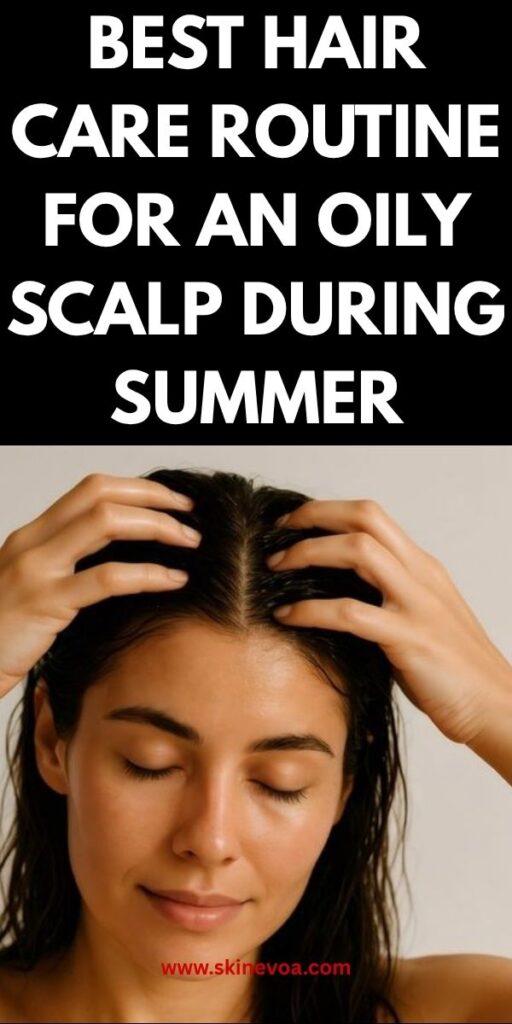

There’s something oddly frustrating about washing your hair in the morning only to feel like it needs another wash before dinner. One minute your roots are light and bouncy. A few hours later? Flat, shiny, and clinging to your scalp.
If that sounds familiar, you’re definitely not alone.
Summer has a way of making even the healthiest hair feel heavier than usual. Heat, humidity, sweat, sunscreen, and time spent outdoors all seem to gang up on your scalp. Suddenly your favourite hairstyle refuses to cooperate, dry shampoo becomes your closest companion, and you start wondering whether you’re doing something wrong.
Here’s the reassuring part: you probably aren’t.
An oily scalp during summer is incredibly common. In fact, warmer temperatures naturally encourage your skin to produce more sebum, the oil made by your sebaceous glands. Sebum isn’t the enemy. Quite the opposite. It protects your scalp, keeps your skin comfortable, and helps maintain healthy hair.
The problem starts when summer conditions push oil production into overdrive.
Think of your scalp like your face. On a cool winter morning, your skin may feel balanced. Step outside on a hot, humid afternoon, and suddenly your forehead is shiny. Your scalp reacts in much the same way.
Now add sweat into the mix.
Sweat doesn’t contain oil, but it blends with sebum already sitting on your scalp. Together they spread across your hair strands, making your roots appear greasy much sooner than you’d expect. Fine hair tends to show this first because there’s simply less hair available to absorb and disguise the oil.
Humidity doesn’t help either.
Contrary to what many people believe, humid air doesn’t directly make your scalp produce more oil. Instead, it prevents sweat from evaporating efficiently. Your scalp stays damp for longer, and that moisture combines with natural oils, styling products, and tiny particles from the environment. The result? Hair that feels heavier, stickier, and far less fresh.
You know what? That’s why someone can shower every morning and still feel like their hair looks “dirty” by lunchtime.
It’s not always dirt.
More often, it’s a combination of perfectly normal body processes amplified by summer weather.
It’s Not Just the Weather. Your Daily Routine Matters Too
Summer changes more than the temperature.
Maybe you’re exercising more. Walking between classes. Chasing kids around the park. Commuting in the afternoon sun. Spending weekends at the beach or pool.
Every one of those activities affects your scalp.
Sweat accumulates beneath hats and helmets. Sunscreen accidentally transfers from your forehead into your hairline. Saltwater and chlorine can leave residue behind. Even frequent ponytails can trap warmth against your scalp, creating an environment where oil and sweat linger longer than usual.
Then there’s the temptation to fight grease by washing your hair more aggressively.
At first, it feels like the obvious answer.
Ironically, it can backfire.
Harsh shampoos strip away the oils your scalp actually needs. In response, your sebaceous glands may compensate by producing even more oil to restore balance. It becomes a frustrating cycle: wash, strip, overproduce, repeat.
That doesn’t mean you should avoid washing your hair. Far from it. The trick is finding the balance between keeping your scalp clean and preserving its natural protective barrier.
We’ll explore exactly how to do that later in this guide.
The Science Behind Summer Sebum
Let’s simplify what’s happening beneath your hair.
Tiny glands attached to each hair follicle produce sebum throughout the year. Hormones largely control how active these glands are, which explains why teenagers often experience oilier skin and hair than older adults.
But hormones aren’t the only influence.
Temperature matters.
Research has found that sebum production generally increases during warmer months. As your body works harder to regulate heat, blood circulation near the skin increases, sweat glands become more active, and the environment around hair follicles changes. While scientists are still studying every detail, the pattern is clear enough that dermatologists routinely see more complaints about oily skin and greasy hair during summer.
Interestingly, the amount of oil your scalp produces isn’t always what bothers people most.
It’s how that oil behaves.
Fresh sebum is relatively light. Once it mixes with sweat, dead skin cells, pollution, and leftover styling products, it forms a film that weighs hair down. That’s why freshly washed hair can lose volume surprisingly quickly on hot days.
It’s also why simply adding more styling products often makes the problem worse instead of better.
Why Some People Get Greasier Than Others
Have you ever noticed that your friend can go three days without washing their hair while yours looks oily after just one?
There’s a reason for that.
Several factors influence how oily your scalp becomes:
- Hair type: Fine, straight hair shows oil much faster because sebum travels down the hair shaft with little resistance.
- Genetics: Some people naturally produce more sebum than others.
- Hormones: Puberty, pregnancy, menopause, and hormonal fluctuations can all affect oil production.
- Stress: High stress levels may influence hormone activity, indirectly increasing oiliness in some people.
- Hair products: Heavy creams, oils, and silicones can build up quickly during humid weather.
- Exercise: More physical activity usually means more sweat, especially during summer.
Here’s something many people overlook.
An oily scalp doesn’t automatically mean your hair is unhealthy.
In fact, people with naturally oily scalps often experience less hair dryness and fewer split ends because their hair receives more natural conditioning. The goal isn’t to eliminate oil; it’s to manage it so your scalp stays comfortable and your hair looks fresh.
A Quick Reality Check
Social media loves simple answers.
“Wash your hair only once a week.”
“Never shampoo daily.”
“Train your scalp.”
“Apply oil to reduce oil.”
These tips sound convincing because they’re easy to remember. Real life is a little messier.
Hair care isn’t one-size-fits-all.
Someone with thick, curly hair living in a cool climate has very different needs from someone with fine, straight hair commuting through hot, humid weather every day.
That’s why the best summer routine isn’t the trendiest one; it’s the one that matches your scalp, your lifestyle, and your hair type.
And that’s exactly what we’ll build in the next sections.
What’s Really Behind an Oily Scalp? (And Why It Isn’t Always Your Fault)
Now that we’ve covered why summer seems to turn your hair greasy overnight, let’s look a little deeper.
Because here’s the thing—heat and humidity are only part of the story.
If your scalp feels oily every summer, chances are several factors are working together. Some you can change. Others are simply part of how your body works.
Understanding the difference makes it much easier to build a routine that actually helps instead of leaving you stuck in a cycle of wash, repeat, and wonder why nothing changes.
Your Scalp Is Doing Exactly What It Was Designed to Do
It’s easy to think of oil as the enemy. After all, nobody enjoys hair that looks limp before lunchtime.
But your scalp doesn’t produce sebum to annoy you.
Sebum is a natural moisturizer made by tiny sebaceous glands attached to your hair follicles. It coats both your scalp and hair, helping to:
Keep the skin from drying out
Protect the scalp’s natural barrier
Reduce moisture loss
Add softness and flexibility to hair strands
Support a healthy scalp microbiome
Without enough sebum, your scalp can become dry, itchy, and irritated. Hair may lose its shine and become brittle or more likely to break.
The goal isn’t to eliminate oil. It’s to keep production balanced.
Think of sebum like cooking oil. A little in the pan helps everything work smoothly. Pour in half the bottle, though, and you’ve got a mess.
Heat Turns Up the Volume
Summer changes your environment in ways your scalp can’t ignore.
As temperatures rise, your body works harder to cool itself. Blood flow to the skin increases, sweat glands become more active, and your scalp spends more time in warm, humid conditions.
That combination often makes existing oil spread more quickly through your hair.
If you’ve ever noticed your roots looking greasy while the ends still feel dry, you’re not imagining it. Sebum starts at the scalp, and depending on your hair texture, it may never fully reach the ends.
This is especially common if you have:
Long hair
Curly or coily hair
Hair that’s been colored or heat-styled regularly
So yes—you can have an oily scalp and dry hair at the same time.
It’s more common than many people realize.
Sweat Isn’t Oil—But It Makes Oil More Noticeable
One of the biggest misconceptions about summer hair is that sweat causes greasy hair.
Not exactly.
Sweat is mostly water with small amounts of salt and minerals. On its own, it doesn’t make hair oily.
The problem starts when sweat mixes with:
Sebum
Dead skin cells
Dust and pollution
Sunscreen around the hairline
Styling products
Dry shampoo residue
Together, they create a film that makes hair feel sticky, heavy, and flat.
It’s similar to wiping a kitchen counter with a damp cloth but never rinsing it. At first it looks clean. After a while, everything starts to build up.
Your scalp works the same way.
Hormones Play a Bigger Role Than You Think
Have you ever wondered why your hair behaved one way at sixteen and completely differently at thirty?
Hormones have a lot to do with it.
Androgens—a group of hormones found in both men and women—help regulate sebum production.
Changes during different life stages can affect how oily your scalp becomes:
Puberty
Pregnancy
Postpartum recovery
Menstrual cycles
Perimenopause and menopause
Certain medical conditions, such as polycystic ovary syndrome (PCOS)
Many women notice their scalp becomes oilier at specific times of the month, while others experience the opposite.
Neither is unusual.
Your scalp often reflects what’s happening inside your body.
Hair Products Can Quietly Make Things Worse
Summer often encourages us to use more products, not fewer.
Leave-in conditioners.
Heat protectants.
Hair oils.
Anti-frizz creams.
Sea salt sprays.
UV protection mists.
None of these are bad on their own. In fact, many are excellent products.
The challenge comes when several layers build up over time.
Heavy formulas can trap oil close to the scalp, making hair feel greasy even after washing.
A good rule of thumb?
Keep richer products focused on the mid-lengths and ends of your hair unless the product specifically says it’s designed for the scalp.
Your roots usually don’t need extra moisture.
The Dry Shampoo Trap
Let’s talk about one of summer’s most-loved products.
Dry shampoo is genuinely useful.
It absorbs excess oil, adds texture, and buys you another day between washes when you’re short on time.
Busy mornings happen.
Late meetings happen.
School runs happen.
Dry shampoo can absolutely help.
But it isn’t shampoo.
It doesn’t remove oil.
It doesn’t wash away sweat.
It doesn’t clean your scalp.
Instead, it absorbs some surface oil while leaving everything else behind.
Use it day after day without properly cleansing, and residue starts collecting around hair follicles.
Eventually, your scalp may feel itchy, flaky, or unusually sensitive.
Think of dry shampoo as a temporary refresh—not a replacement for washing.
Can You Really “Train” Your Scalp?
This idea has exploded across social media.
You’ve probably heard something like this:
“If you wash your hair less often, your scalp will eventually stop producing so much oil.”
It sounds logical.
Unfortunately, biology doesn’t work that way.
Sebum production is influenced mainly by genetics, hormones, age, and environmental factors—not by how frequently you shampoo.
If washing every day suits your hair and scalp, that’s okay.
If washing twice a week works better, that’s okay too.
The healthiest routine is the one that keeps your scalp comfortable without causing irritation or excessive buildup.
Instead of trying to “train” your scalp, pay attention to how it feels.
Is it itchy?
Does it smell fresh?
Do your roots feel heavy?
Are flakes appearing?
Those clues matter more than following someone else’s schedule.
When an Oily Scalp Is More Than Just Oil
Sometimes persistent greasiness isn’t simply a summer issue.
It can signal an underlying scalp condition that deserves a little extra care.
Seborrheic Dermatitis
This common condition causes:
Oily yellowish flakes
Redness
Persistent itching
Inflamed patches around the hairline, eyebrows, ears, or nose
The condition is linked to an inflammatory reaction involving a naturally occurring yeast called Malassezia, which thrives in oily areas of the skin.
Specialised shampoos containing ingredients like ketoconazole, zinc pyrithione, or selenium sulfide can often help manage symptoms.
Product Buildup
If your hair still feels greasy immediately after washing, buildup may be the culprit.
Signs include:
Hair that feels coated
Dullness despite clean roots
Flat volume
Products no longer working well
White residue on brushes
A clarifying shampoo used occasionally can help remove stubborn residue without becoming part of your daily routine.
Scalp Psoriasis
Although less common, psoriasis can sometimes be mistaken for dandruff.
Unlike ordinary flakes, psoriasis usually causes:
Thick, silvery scales
Clearly defined patches
Persistent itching or soreness
Flakes that extend beyond the hairline
If symptoms don’t improve with regular dandruff treatments, it’s worth seeing a dermatologist for an accurate diagnosis.
Are You Making These Common Summer Hair Mistakes?
Honestly, most people are.
Here are a few habits that quietly encourage excess oil or buildup:
Scrubbing your scalp aggressively with your nails.
Applying conditioner directly to your roots.
Sleeping with sweaty hair.
Reusing dirty hairbrushes.
Wearing tight hats all day without letting your scalp breathe.
Layering multiple styling products every morning.
Constantly touching your hair throughout the day.
Skipping regular cleaning of pillowcases, hats, and hair accessories.
None of these habits will ruin your hair overnight.
But together, they can make your scalp feel oilier than it really is.
Sometimes, the smallest adjustments bring the biggest improvements.
Your Scalp Is Skin, Treat It That Way
It’s easy to forget that your scalp is simply an extension of the skin on your face.
You probably wouldn’t pile on several layers of skincare without cleansing properly. You also wouldn’t scrub your face harshly every few hours because it looked shiny.
Your scalp deserves that same balanced approach.
Clean it gently.
Protect its natural barrier.
Avoid extremes.
And remember that a little oil is completely normal, even healthy.
The Summer Hair Care Routine That Actually Works for an Oily Scalp
By now, you’ve probably noticed a pattern.
Managing an oily scalp isn’t about finding one miracle shampoo or following a viral hair hack. It’s about building a routine that keeps your scalp clean, your hair comfortable, and your natural oils in balance.
The good news? It doesn’t have to be complicated.
Whether you’re rushing to an early lecture, juggling meetings, or getting the kids ready before work, a few smart habits can make a noticeable difference.
Let’s build a routine that’s realistic enough to stick with, even on the hottest days of the year.
Step 1: Wash Your Hair When Your Scalp Needs It
This is probably the question people ask most.
“How often should I wash oily hair in summer?”
The honest answer is: as often as your scalp needs it.
Forget the idea that there’s one perfect schedule for everyone.
Your ideal routine depends on your hair type, activity level, climate, and how much oil your scalp naturally produces.
Here’s a general guide:
| Hair Type | Recommended Washing Frequency |
|---|---|
| Fine, straight, oily hair | Daily or every other day |
| Medium hair | Every 2–3 days |
| Thick hair | Every 2–4 days |
| Curly or coily hair | Every 4–7 days (or as needed) |
| Very active lifestyle | Wash after heavy sweating when possible |
If your scalp feels greasy, itchy, or smells less than fresh, it’s okay to wash it.
You’re not “failing” your hair by shampooing more often during summer.
In fact, allowing sweat, oil, and product residue to sit on your scalp for days can sometimes lead to irritation or clogged hair follicles.
The key isn’t washing less.
It’s washing gently.
Step 2: Choose the Right Shampoo. Not the Strongest One
When your scalp feels oily, it’s tempting to reach for the most powerful “deep-cleaning” shampoo you can find.
That can be a mistake.
Harsh cleansers may leave your hair feeling squeaky clean for a day, but they can also strip away too much of your scalp’s protective oil.
Instead, look for shampoos labelled:
- Balancing
- Clarifying (for occasional use)
- Scalp care
- Oil control
- Lightweight
Helpful ingredients include:
Salicylic Acid
Think of this as a gentle exfoliator.
It helps dissolve excess oil and lift away dead skin cells that collect around hair follicles.
It’s especially useful if your scalp feels oily and flaky at the same time.
Zinc Pyrithione
If dandruff joins the party every summer, this ingredient can help reduce both flakes and itchiness while supporting a healthier scalp environment.
Ketoconazole
Often recommended for seborrheic dermatitis, ketoconazole helps reduce the yeast that contributes to oily, flaky scalps.
You don’t need it unless dandruff or inflammation is an issue, but it’s worth knowing about.
Tea Tree Oil
Tea tree oil has natural cleansing properties and can leave the scalp feeling refreshed.
Just remember that essential oils are potent. Products containing tea tree oil are generally safer than applying pure oil directly to your scalp.
Gentle Sulfates or Sulfate-Free?
This debate gets plenty of attention.
Here’s a balanced view:
Sulfate-containing shampoos clean very effectively and work well for many people with oily scalps.
Sulfate-free formulas are often gentler, especially for colour-treated or sensitive hair.
Neither is automatically better.
Choose the one that leaves your scalp feeling clean without making it feel tight or irritated.
Step 3: Shampoo Your Scalp, Not Your Hair
This sounds simple, but it changes everything.
Shampoo is made to clean your scalp.
The lather that rinses through the lengths of your hair is usually enough to clean the strands.
Here’s an easy method:
- Thoroughly wet your hair with warm, not hot, water.
- Apply shampoo mainly to your scalp.
- Massage gently using your fingertips.
- Spend about one minute cleansing.
- Rinse completely.
Avoid scratching with your fingernails.
A gentle fingertip massage removes oil more effectively without irritating the skin.
Step 4: Condition Only Where You Need It
Many people with oily roots skip conditioner altogether.
Ironically, that can leave the rest of the hair dry and more prone to breakage.
Conditioner belongs mainly on:
- Mid-lengths
- Ends
- Areas that feel dry
Avoid applying heavy conditioners directly onto your scalp unless they’re specifically designed for scalp care.
Think of it like moisturising your elbows instead of your forehead.
Different parts of your body have different needs.
Step 5: Rinse Well. Really Well
Sometimes greasy hair isn’t caused by oil at all.
It’s leftover shampoo.
Or conditioner.
Or styling products that weren’t fully rinsed away.
Take an extra 30 seconds at the end of your shower.
Lift sections of your hair and let water run through your roots.
It sounds almost too simple, but incomplete rinsing is surprisingly common.
Step 6: Dry Your Scalp Properly
Summer makes air-drying tempting.
And for many people, it’s perfectly fine.
But if your scalp stays damp for hours, especially after workouts, it creates an environment where sweat, oil, and microorganisms linger longer.
You don’t have to blast your hair with high heat.
Instead:
- Gently blot with a microfiber towel.
- Let your hair air-dry partially.
- Finish with a blow dryer on a cool or low-heat setting if needed.
- Focus on drying the scalp first.
Your hair doesn’t need to be bone dry.
Your scalp simply shouldn’t stay damp all afternoon.
Step 7: Use Dry Shampoo the Smart Way
Earlier, we talked about the limits of dry shampoo.
That doesn’t mean you should avoid it.
Used correctly, it’s incredibly helpful.
Here’s the trick:
Apply it before your hair becomes greasy.
Many people wait until their roots already look oily.
By then, the product has to work much harder.
Instead:
- Spray lightly onto clean, dry roots before bed or early in the morning.
- Give it a minute to absorb.
- Massage it in gently.
- Brush out any excess.
This helps absorb oil as it’s produced rather than trying to rescue already-flat hair.
Just don’t let dry shampoo replace regular washing for days on end.
What About Clarifying Shampoo?
Clarifying shampoos have one job:
Remove stubborn buildup.
They can wash away:
- Dry shampoo residue
- Silicone buildup
- Hard water minerals
- Heavy styling products
- Sweat mixed with oils
That fresh, lightweight feeling afterwards can be wonderful.
But more isn’t better.
For most people, using a clarifying shampoo once every one to four weeks is enough.
If your hair is colour-treated, chemically processed, or naturally dry, you may want to use one even less often.
Small Habits That Keep Your Hair Fresher Longer
You don’t always need new products.
Sometimes a few daily habits make the biggest difference.
Try these:
Clean Your Hairbrush
Your brush collects oil, dust, dead skin, and leftover styling products.
Every time you brush dirty tools through clean hair, some of that buildup comes right back.
Aim to remove trapped hair weekly and wash the brush every few weeks.
Change Pillowcases Regularly
Your pillowcase absorbs:
- Natural oils
- Sweat
- Hair products
- Skincare residue
Changing it every few days, especially during summer, can help your scalp stay fresher.
Silk and satin pillowcases may also reduce friction, though cotton works well if it’s kept clean.
Keep Hands Out of Your Hair
It’s almost automatic.
Thinking during a meeting?
Twirling your hair.
Studying?
Running your fingers through your roots.
Scrolling on your phone?
Adjusting your bangs every few minutes.
Your hands transfer oil, sweat, and dirt throughout the day.
The less often you touch your hair, the fresher it tends to stay.
Wear Breathable Hats
Caps and sun hats protect your scalp from UV exposure, which is a good thing.
Just choose breathable materials when possible.
If your hat becomes damp with sweat, let it dry completely before wearing it again—or wash it if needed.
Morning vs. Evening Washing
People often wonder which is better.
The truth?
It depends on your routine.
Morning washing works well if:
- Your scalp becomes oily overnight.
- You like starting the day with fresh volume.
- You exercise in the evening.
Evening washing may suit you if:
- You work out after work.
- You prefer sleeping with clean hair.
- You have enough time to dry your scalp before bed.
Neither choice is inherently better.
Consistency matters more than the clock.
A Simple Summer Routine You Can Actually Stick To
If all of this feels like a lot, don’t worry.
Here’s a practical routine for most people with an oily scalp:
Morning:
- Brush gently with a clean brush.
- Use a small amount of dry shampoo only if needed.
- Avoid heavy styling products at the roots.
After Exercise:
- Rinse or shampoo if you’ve sweated heavily.
- Dry your scalp thoroughly.
Wash Days:
- Cleanse your scalp gently.
- Condition only the mid-lengths and ends.
- Rinse well.
- Dry your scalp before tying your hair up.
Weekly:
- Wash your brush.
- Change pillowcases frequently.
- Use a clarifying shampoo if you notice buildup.
Notice that none of these steps is extreme.
Healthy hair care is usually built on consistency, not complicated routines.
Home Remedies, Summer Hair Tips by Hair Type, and When to See a Dermatologist
By now, you know that managing an oily scalp isn’t about fighting your body’s natural oils—it’s about keeping them under control without throwing your scalp off balance.
Still, if you’ve spent any time scrolling through TikTok, Pinterest, or YouTube, you’ve probably seen dozens of DIY remedies promising to “stop oily hair forever.”
Some have a bit of science behind them.
Others not so much.
Let’s separate the helpful ideas from the hype.
Do Home Remedies Actually Work?
The internet loves simple solutions.
Rinse your hair with vinegar.
Rub lemon juice on your scalp.
Sleep with coconut oil.
Apply baking soda.
Sounds easy enough.
But your scalp is living skin, not a science experiment.
Some natural remedies can complement a good routine, while others may do more harm than good.
Apple Cider Vinegar: Helpful With Limits
Apple cider vinegar (ACV) has become a favourite in DIY hair care.
Why?
Because it’s mildly acidic.
Many people find that a diluted ACV rinse helps remove light product residue, smooth the hair cuticle, and leave hair looking shinier.
It may also help restore the scalp’s natural pH after using highly alkaline products.
That said, ACV isn’t a cure for excessive oil production.
And using it too often, or without diluting it, can irritate the scalp.
If you want to try it:
- Mix one to two tablespoons of apple cider vinegar with one cup of water.
- Use it after shampooing.
- Rinse thoroughly.
- Limit it to once every week or two.
If your scalp burns, stop using it.
Aloe Vera: A Gentle Option
Aloe vera has a reputation for soothing irritated skin, and your scalp is no exception.
While it won’t magically reduce sebum production, it may help calm minor irritation caused by sweat or product buildup.
Many lightweight scalp treatments include aloe because it hydrates without leaving a greasy finish.
Look for products that contain aloe rather than applying heavily fragranced gels intended for sunburn.
Lemon Juice: Better Left in the Kitchen
Lemon juice often appears in DIY beauty recipes because it’s acidic.
But here’s the problem.
Fresh lemon juice is unpredictable.
It can irritate sensitive skin and increase the risk of sun-related reactions when exposed to UV light.
That’s not something you want during summer.
If you’re looking for a balancing rinse, professionally formulated scalp products are a much safer choice.
Coconut Oil: Great for Dry Ends, Not Oily Roots
Coconut oil has earned its place in hair care.
It penetrates the hair shaft better than many other oils and may reduce protein loss in damaged hair.
But if your scalp already feels greasy?
Adding more oil to your roots usually isn’t the answer.
Instead, save coconut oil for dry or damaged ends before shampooing.
Your scalp probably doesn’t need the extra richness.
Baking Soda: Skip It
Years ago, baking soda became popular as a “natural shampoo.”
Today, dermatologists generally advise against using it regularly.
Why?
Because baking soda is highly alkaline.
Repeated use can disrupt the scalp’s natural barrier, increase dryness, and even leave hair feeling rough over time.
Sometimes “natural” simply means “found in nature”, not necessarily “good for your scalp.”
Hair Type Matters More Than Most Advice Suggests
One reason hair advice feels so confusing is that people often forget there’s no such thing as one universal hair routine.
Let’s look at what works best for different hair types.
Fine, Straight Hair
Fine hair tends to show oil the fastest.
Sebum travels down straight strands with very little resistance, so roots can appear flat within hours.
Focus on:
- Lightweight shampoos
- Volumizing products
- Minimal heavy serums
- Washing whenever your scalp feels oily
Dry shampoo can also work particularly well on fine hair between washes.
Wavy Hair
Wavy hair sits somewhere in the middle.
Oil reaches farther than it does with curly hair, but not quite as easily as with straight hair.
To keep waves looking fresh:
- Use lightweight conditioners.
- Avoid applying creams near the scalp.
- Scrunch styling products into the mid-lengths rather than the roots.
Curly Hair
Curly hair often surprises people.
Even if your scalp produces plenty of oil, the curls themselves may still feel dry.
That’s because sebum has a harder time travelling around bends and coils.
This means you may need:
- More moisture on your hair
- Less product directly on your scalp
- Gentle cleansing that removes sweat without stripping curls
It’s perfectly possible to have an oily scalp and thirsty curls at the same time.
Coily Hair
Coily hair naturally retains less oil along the hair shaft.
The scalp may still become oily during summer, but the lengths often benefit from richer conditioning.
Balance is everything.
Cleanse the scalp thoroughly while continuing to nourish the ends.
Can Your Diet Affect an Oily Scalp?
People often ask whether eating certain foods causes greasy hair.
The answer isn’t completely straightforward.
No single food automatically makes your scalp oily.
However, overall nutrition does influence skin and scalp health.
A balanced eating pattern that includes:
- Lean proteins
- Whole grains
- Colorful vegetables
- Fruits rich in antioxidants
- Healthy fats from foods like salmon, walnuts, and avocados
Supports healthy hair growth and skin function.
Staying hydrated also matters.
Drinking more water won’t suddenly stop oil production, but dehydration can affect your skin’s overall health, especially during hot weather.
Small Lifestyle Changes That Make a Big Difference
Sometimes the simplest habits have the biggest payoff.
Wash After Heavy Sweating
You don’t necessarily need a full shampoo every time you exercise.
But after an especially sweaty workout, cleansing your scalp can prevent sweat, salt, and oil from lingering.
Keep Hair Off Your Neck
Long hair traps warmth.
Loose braids, soft ponytails, or claw clips can help improve airflow on especially hot days.
Clean Hair Accessories
Hair ties.
Headbands.
Claw clips.
Beanies.
Sun hats.
All of them collect oils over time.
A quick wash every week or two keeps them from transferring buildup back onto freshly washed hair.
Protect Your Scalp from the Sun
People remember sunscreen for their face.
The scalp? Not always.
A sunburned scalp can become irritated, flaky, and uncomfortable.
If you’ll be outdoors for long periods:
- Wear a breathable hat.
- Part your hair differently from time to time.
- Consider a scalp sunscreen or UV-protective hair mist if you have thinning hair or a visible part line.
Healthy scalp care includes sun protection, too.
When Should You See a Dermatologist?
An oily scalp is usually manageable with the right routine.
But sometimes it’s worth getting professional advice.
Make an appointment if you notice:
- Persistent itching that doesn’t improve
- Painful bumps on the scalp
- Thick yellow or silvery scales
- Red, inflamed patches
- Hair loss that’s becoming noticeable
- Bleeding or open sores
- Symptoms lasting for several weeks despite changing your routine
A dermatologist can determine whether you’re dealing with simple oiliness or a condition such as seborrheic dermatitis, psoriasis, fungal overgrowth, or another scalp disorder.
There’s no prize for struggling through discomfort.
Sometimes the right diagnosis makes all the difference.
Frequently Asked Questions
Does washing my hair every day make it oilier?
No. There’s no strong evidence that frequent washing causes your scalp to permanently produce more oil. If your hair becomes greasy daily, washing with a gentle shampoo every day can be perfectly appropriate.
Is dry shampoo bad for my scalp?
Not when used occasionally.
Dry shampoo is designed to absorb excess oil, but it doesn’t clean the scalp. It works best as a temporary refresher between washes rather than a replacement for shampoo.
Why is my scalp oily but my hair ends are dry?
This is very common.
Oil is produced at the scalp, and depending on your hair length and texture, it may never reach the ends. Heat styling, colouring, and sun exposure can also leave the lower half of your hair drier.
Can stress make my scalp oilier?
It can.
Stress affects hormones that influence your skin and scalp. While stress isn’t the only cause of oily hair, many people notice changes during particularly demanding periods.
Does brushing spread oil?
Yes.
Brushing helps distribute natural oils from your scalp along the hair shaft. That’s healthy to a point, but excessive brushing can make fine hair look greasy sooner.
Is oily hair unhealthy?
Not at all.
An oily scalp simply means your sebaceous glands are active. In fact, natural oils help protect both your scalp and hair. The goal isn’t to eliminate oil; it’s to keep it balanced and comfortable.
Final Thoughts: Work With Your Scalp, Not Against It
Summer has a way of exposing every little hair concern. A bit more heat, a touch more humidity, and suddenly your roots seem to lose their freshness before the day is half over.
The good news is that an oily scalp isn’t a flaw; it’s simply your skin responding to warmer weather, sweat, hormones, and everyday life. Once you understand what’s happening, managing it becomes much less frustrating.
Instead of chasing trends or harsh treatments, focus on the basics: cleanse your scalp when it needs it, choose products that suit your hair type, avoid heavy buildup, and don’t be afraid to adjust your routine as the seasons change.
Remember, healthy hair doesn’t mean oil-free hair. It means a scalp that’s clean, comfortable, and in balance.
With a few thoughtful habits, you can enjoy fresh, healthy-looking hair all summer long, without feeling like you’re constantly fighting your own scalp.
Key Takeaways
- Summer heat, humidity, and sweat make natural scalp oil more noticeable.
- Wash your hair based on your scalp’s needs, not outdated rules.
- Choose gentle, balancing shampoos over harsh cleansers.
- Apply conditioner only to the mid-lengths and ends if your roots are oily.
- Use dry shampoo as a short-term refresh, not a replacement for washing.
- Avoid DIY remedies that may irritate your scalp, such as baking soda or undiluted lemon juice.
- If persistent oiliness is accompanied by redness, thick flakes, pain, or hair loss, consult a dermatologist.