Castor oil has been sitting on bathroom shelves, dressing tables, and beauty cabinets for generations. Long before short-form videos made hair oiling trendy again, many families were already using it as part of their weekly hair routines.
Some people swear it made their hair thicker. Others say it helped them keep length after years of breakage. Then some tried it once, struggled to wash it out, and decided the whole thing was more trouble than it was worth.
So, what’s the truth?
Can castor oil actually grow hair, or is it simply a rich conditioning oil with a very impressive reputation?
The answer sits somewhere between those two ideas. Castor oil may support healthier-looking hair, improve shine, reduce dryness, and help some people retain more length by lowering breakage. However, strong clinical evidence that it directly stimulates new hair growth is still limited.
That doesn’t mean castor oil is useless. Far from it.
It simply means we need to separate hair growth from hair retention. Those terms are often used as if they mean the same thing, but they don’t.
Your hair may be growing from the scalp while the ends keep breaking. In that case, your hair is growing, but you may not see more length. A good hair-care routine can help reduce that loss, which may make your hair appear to grow faster.
Here’s the thing: sometimes healthier hair isn’t about finding one miracle ingredient. It’s about reducing the small forms of damage that quietly add up.
Let me explain.
What Is Castor Oil?
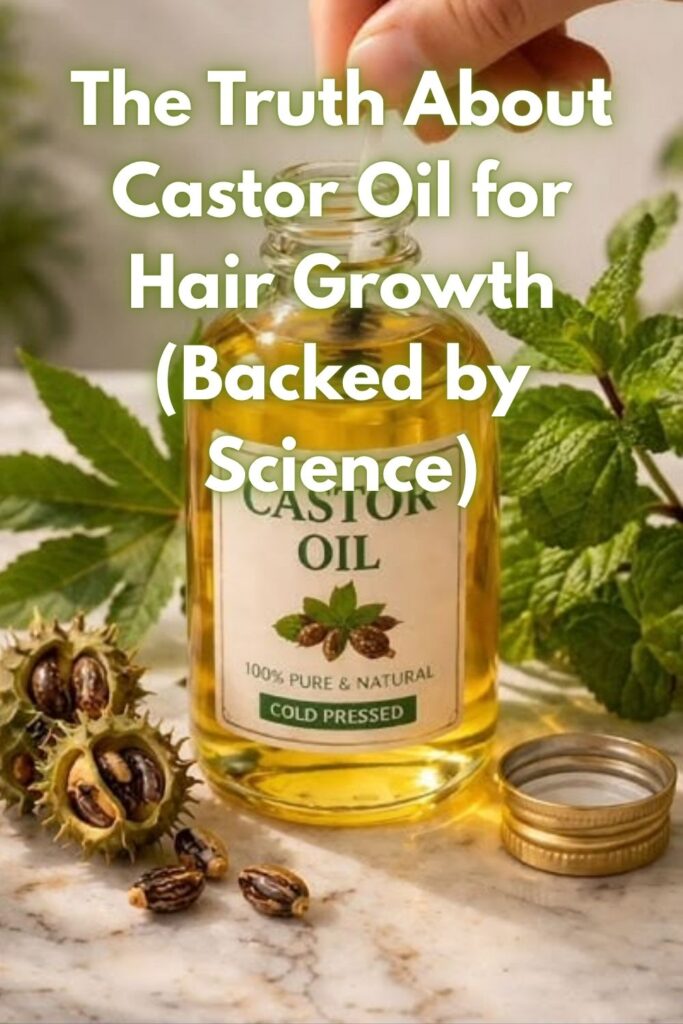
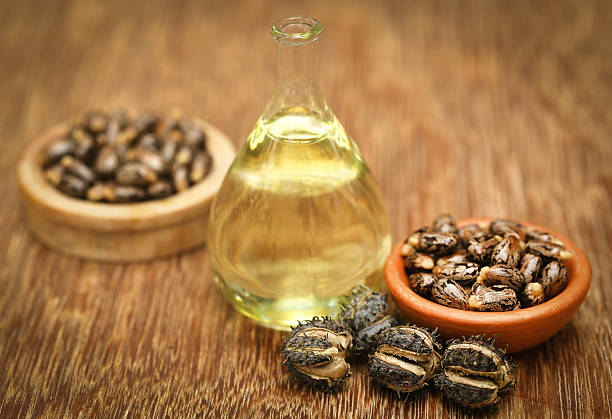
Castor oil is a thick vegetable oil made from the seeds of the Ricinus communis plant. The oil has been used for many purposes over the years, including skincare, cosmetic products, and traditional beauty routines.
It has a dense texture and a glossy finish. Compared with lighter oils, such as grapeseed or jojoba oil, castor oil feels heavier and more concentrated.
Its main fatty acid is called ricinoleic acid. Castor oil also contains other fatty acids that may help coat and soften the hair shaft. This coating effect is one reason the oil can make dry hair look smoother and shinier.
The texture is part of its appeal, and part of its challenge.
A small amount can go a long way. Use too much, and your hair may feel greasy, heavy, or difficult to wash. That’s why many people mix castor oil with a lighter oil before applying it.
Think of castor oil like a thick winter blanket. It can feel comforting and protective when used in the right amount. Wrap yourself in ten blankets, though, and you may start wondering why you’re uncomfortable.
The same principle applies to hair oil.
Does Castor Oil Really Make Hair Grow?
This is the question everyone wants answered.
The short version is this:
There is currently no strong clinical evidence proving that castor oil directly increases the rate of human hair growth or reliably regrows lost hair. A systematic review found weaker evidence for castor oil improving hair quality and no strong evidence supporting it as a hair-growth treatment.
That may sound disappointing, especially if you’ve seen dramatic before-and-after photos online. But those photos don’t always tell the whole story.
Hair naturally grows over time. If someone begins using castor oil and takes better care of their hair at the same time, several things may change:
- They may massage their scalp more often.
- They may reduce heat styling.
- They may protect their ends.
- They may wash and condition their hair more carefully.
- They may experience less breakage.
- They may become more consistent with their overall routine.
After a few months, their hair may look longer and fuller.
Was it the castor oil alone?
There’s no easy way to know.
That doesn’t mean their experience wasn’t real. It simply means the result may have come from the full routine rather than one ingredient.
You know what? This is where hair care gets a little confusing. People often say, “This oil grew my hair,” when what they may really mean is, “This oil helped me keep more of the hair I was already growing.”
Those are different outcomes, but both can matter.
Hair Growth vs. Hair Retention: The Difference Matters
Hair growth begins inside the follicle beneath the scalp. Your genetics, hormones, nutrition, age, health, and hair-growth cycle all influence this process.
Hair retention is about what happens after the hair strand grows out.
If the strand becomes dry, weak, tangled, or damaged, it may break before you see much length. This is especially common with textured, curly, coily, chemically treated, or frequently heat-styled hair.
Imagine filling a bucket with water while there’s a small crack near the bottom.
Water keeps entering the bucket, but some of it escapes.
Your hair can behave in a similar way. New hair may keep growing from the scalp, while older hair breaks at the ends.
A conditioning oil may help reduce friction and improve how the hair feels. That may support length retention, even if the oil doesn’t change the activity of the follicle itself.
This is why some people genuinely notice longer hair after adding castor oil to their routine.
Their hair may not be growing faster. It may simply be breaking less.
And, honestly, that’s still useful.
Potential Benefits of Castor Oil for Hair
Castor oil may not be a proven hair-growth treatment, but it can still offer cosmetic and practical benefits.
1. It May Make Hair Look Shinier
Castor oil forms a coating around the hair shaft. This can create a smoother surface that reflects more light.
The result?
Hair may look glossier and healthier.
This effect can be especially noticeable on dull, dry, or weather-exposed hair. If your hair looks rough after spending time in the sun or dealing with dry indoor air, a small amount of oil may improve its appearance.
The change is mostly cosmetic, but cosmetic improvements still count. Feeling better about your hair can make your entire routine feel more enjoyable.
2. It May Help Reduce Dryness
Castor oil is an emollient, meaning it can soften and smooth the surface of the hair.
However, there’s an important detail here: oil does not add water to dry hair.
Water provides hydration. Oils may help reduce moisture loss by forming a protective layer over the hair.
That means castor oil often works best when used after a water-based leave-in conditioner or moisturising product.
For example:
- Apply a water-based leave-in conditioner.
- Add a small amount of castor oil to the ends.
- Style your hair as usual.
The leave-in provides moisture, while the oil may help slow moisture loss.
It’s a simple partnership.
3. It May Support Length Retention
Dry hair tends to experience more friction. More friction can lead to tangles, split ends, and breakage.
Because castor oil is thick and lubricating, it may help some hair types feel softer and easier to manage. When hair is easier to handle, you may use less force while detangling.
That can be helpful for people with long, curly, coily, or fragile hair.
Still, more oil isn’t always better.
Too much can make hair sticky or difficult to detangle. The goal is to reduce friction—not create a heavy coating that attracts dirt and product buildup.
4. It May Help Smooth Flyaways
A tiny amount of castor oil can be used to smooth dry ends or flyaways.
This can be useful before work, a meeting, a presentation, or a special event. If you’re a busy professional, you may not have time for a full wash-and-style routine every morning.
A small amount of oil can give the hair a more polished finish in seconds.
The keyword is small.
Start with one or two drops. Warm the oil between your palms, then lightly touch the surface of the hair.
If your hair looks wet or greasy, you’ve probably used too much.
5. It May Improve the Feel of a Dry Scalp
Some people enjoy using diluted castor oil as part of a scalp massage.
The oil may soften dry skin and reduce the tight feeling that sometimes comes with a dry scalp. However, dryness, dandruff, and scalp irritation are not always the same problem.
Dandruff may involve inflammation or an overgrowth of yeast. Adding heavy oil to the scalp may not solve the issue and could make buildup harder to manage.
So, if you have persistent flakes, redness, itching, or soreness, don’t assume your scalp simply needs more oil.
The cause matters.
Can Castor Oil Make Hair Thicker?
Castor oil may make individual strands look thicker because it coats the hair and adds shine.
It may also make the hair appear fuller by reducing frizz and helping strands group together in a smoother pattern.
But there’s no strong evidence that castor oil increases the number of hair follicles or permanently changes the diameter of the hair shaft.
That distinction is important.
Thicker-looking hair and more hair follicles are not the same thing.
You may notice that your hair feels fuller after using castor oil. That experience can be real, even if the oil hasn’t created new hair.
How to Use Castor Oil on Your Hair
Castor oil is thick, so many people find it easier to mix with a lighter carrier oil.
Good options include:
- Jojoba oil
- Grapeseed oil
- Sweet almond oil
- Argan oil
- Coconut oil, if your hair responds well to it
A simple mixture is:
1 part castor oil + 1 or 2 parts lighter oil
For example, mix:
- 1 teaspoon castor oil
- 1 or 2 teaspoons jojoba or grapeseed oil
You don’t need a large amount.
Method 1: Use It as a Pre-Shampoo Treatment
This method works well if you want to condition your hair before washing.
- Divide your hair into sections.
- Apply a small amount of the oil mixture to the scalp or hair.
- Massage gently with your fingertips.
- Spread a little more oil over dry ends.
- Leave it on for 20 to 60 minutes.
- Shampoo thoroughly.
- Follow with conditioner.
You don’t need to leave it on overnight.
Longer doesn’t always mean better. A shorter treatment may be easier to wash out and less likely to cause buildup.
Method 2: Apply It to the Ends
If your scalp becomes oily easily, skip the roots.
Apply one or two drops to the ends after using a leave-in conditioner.
This method may help reduce dryness and improve shine without making the scalp feel heavy.
Method 3: Add It to a Hair Mask
You can mix a small amount of castor oil into your usual hair mask.
Avoid adding a large amount. Too much oil may prevent the mask from rinsing cleanly.
Try one teaspoon first and see how your hair responds.
Method 4: Use It During a Scalp Massage
Place a small amount of diluted oil on your fingertips.
Massage your scalp using gentle circular movements for about five minutes.
Don’t scratch with your nails. Your scalp isn’t a dirty kitchen surface that needs scrubbing.
Gentle pressure is enough.
The massage may feel relaxing, especially after a long workday. It can also encourage you to slow down for a few minutes, which, for busy parents and professionals, is not always a bad thing.
How Often Should You Use Castor Oil?
For most people, once a week is a reasonable place to start.
If your hair is very dry and coarse, you may use a small amount twice a week. If your scalp becomes greasy or itchy, reduce the frequency.
Pay attention to how your hair behaves.
Signs you may be using too much include:
- Heavy or greasy hair
- Itching
- Product buildup
- Hair that feels stiff
- Difficulty washing the oil out
- Increased tangling
More product doesn’t automatically create better results.
Hair care is less like filling a fuel tank and more like seasoning food. The right amount improves the experience. Too much can overwhelm everything else.
Jamaican Black Castor Oil vs. Regular Castor Oil
Jamaican black castor oil, often called JBCO, is made using a traditional processing method. The castor beans are roasted before the oil is extracted, which gives the finished oil a darker colour and distinctive scent.
Regular castor oil is usually lighter in colour and may have a milder smell.
Many people prefer Jamaican black castor oil for thick, curly, or coily hair because of its rich texture.
However, there is no strong evidence that Jamaican black castor oil grows hair faster than regular castor oil.
The choice often comes down to personal preference.
You may prefer regular castor oil if:
- You want a lighter colour.
- You dislike smoky scents.
- You plan to mix it with other oils.
You may prefer Jamaican black castor oil if:
- You enjoy its traditional feel.
- You have thick or coarse hair.
- You like a richer oil texture.
Neither version is guaranteed to stimulate new growth.
Castor Oil for Curly and Coily Hair
Curly and coily hair often has more bends along the hair shaft.
Those bends can make it harder for natural scalp oils to travel from the roots to the ends. As a result, the ends may become dry even when the scalp feels oily.
Castor oil may help seal in moisture and reduce friction along the length of the hair.
For curls and coils, try this approach:
- Cleanse the hair.
- Apply a water-based leave-in conditioner.
- Add a small amount of castor oil to the ends.
- Apply a cream or styling product if needed.
- Style gently.
The oil should support the routine, not carry the entire routine.
Also, be careful with heavy layers.
Leave-in conditioner, butter, oil, cream, gel, and edge control can create a lot of buildup when used together. If your hair feels coated, dull, or difficult to wash, simplify the routine.
Sometimes the answer is not another product.
Sometimes it’s less product.
Castor Oil for Straight or Fine Hair
Fine hair can become weighed down quickly.
If your strands are thin or naturally smooth, applying castor oil directly to the roots may make your hair look flat.
Try using only one or two drops on the ends.
You can also dilute castor oil with a lighter oil, such as grapeseed oil.
Keep the application away from the scalp unless you have a specific reason to use it there.
Castor Oil for Dry and Damaged Hair
Damaged hair often needs more than oil.
If your hair has been affected by bleach, frequent colouring, heat tools, or chemical treatments, castor oil may improve softness and shine. However, it cannot permanently repair severely damaged hair.
Hair fibres are made of keratin. Once a section is badly damaged, no oil can return it to its original condition.
A good routine may include:
- A gentle shampoo
- A moisturising conditioner
- A protein treatment when appropriate
- A leave-in conditioner
- Heat protection
- Regular trims
- A small amount of oil for softness and shine
Castor oil can play a supporting role, but it isn’t the entire recovery plan.
Common Castor Oil Mistakes to Avoid
Using Too Much
Castor oil is concentrated and thick.
You may only need a teaspoon for your entire head, depending on your hair length and density.
Start small. You can always add more.
Applying It to Dirty Hair for Days
Oil can mix with sweat, styling products, and dead skin cells.
Leaving a heavy layer on the scalp for several days may lead to buildup.
If you use castor oil as a treatment, wash it out afterwards.
Pulling on Hair While Applying It
The oil may feel sticky.
If you pull or stretch the hair aggressively, you may cause breakage.
Apply the oil gently and work in sections.
Expecting Immediate Growth
Hair growth takes time.
If you use castor oil for two weeks and see no major change, that doesn’t necessarily mean your hair is unhealthy.
Hair routines need consistency.
Still, consistency should not turn into unrealistic expectations. An oil cannot override genetics, hormones, nutritional problems, or medical conditions.
Ignoring Scalp Problems
Persistent itching, pain, redness, thick flakes, or sudden hair loss should not be treated with more oil without understanding the cause.
A scalp issue may need a different approach.
Is Castor Oil Safe for Everyone?
Castor oil is generally used topically by many people, but it can cause irritation or allergic contact dermatitis in some cases. Rare reports of severe hair matting have also been described.
Before applying it to your entire scalp, perform a patch test.
Apply a small amount of diluted oil to the inside of your arm.
Wait 24 to 48 hours.
Stop using the oil if you notice:
- Redness
- Burning
- Swelling
- Rash
- Severe itching
Avoid putting castor oil directly into your eyes.
Also, don’t assume that “natural” means risk-free. Plants can irritate too.
Natural products still need thoughtful use.
Should You Put Castor Oil on Your Eyebrows or Eyelashes?
Castor oil is often used on eyebrows and eyelashes.
It may condition existing hairs and make them look shinier or more defined. However, strong evidence that it creates new eyebrow or eyelash growth is limited.
Be especially careful around the eyes.
If you choose to use it, apply a very small amount to the eyebrow area. Avoid placing oil directly on the eyelid margin or inside the eye.
For eyelashes, the risk of irritation may outweigh the possible cosmetic benefit.
What If You’re Experiencing Hair Loss?
Castor oil may be part of a hair-care routine, but it should not replace medical evaluation when hair loss is sudden, severe, patchy, or ongoing.
Hair loss can have many causes, including:
- Genetics
- Hormonal changes
- Stress
- Recent illness
- Nutritional deficiencies
- Certain medications
- Thyroid conditions
- Autoimmune conditions
- Scalp disorders
- Tight hairstyles
If you notice sudden shedding, bald patches, a widening part, or ongoing thinning, consider speaking with a dermatologist or qualified healthcare professional.
The earlier the cause is identified, the easier it may be to choose an appropriate treatment.
This is especially important for mothers experiencing significant postpartum shedding. Some shedding after pregnancy can occur, but severe or prolonged changes deserve professional attention.
Don’t spend months trying every oil on social media while the underlying cause goes unchecked.
A Simple Castor Oil Routine for Busy Women
If your schedule is packed, you don’t need a complicated hair ritual.
Try this once a week:
- Mix one teaspoon of castor oil with two teaspoons of a lighter oil.
- Apply a small amount to the scalp and dry ends.
- Massage gently for five minutes.
- Leave the treatment on for 30 minutes.
- Shampoo and condition as usual.
- Apply a leave-in conditioner.
- Use a tiny amount of oil on the ends if needed.
That’s it.
No ten-step routine. No complicated product layering.
Consistency matters more than making the routine look impressive.
Frequently Asked Questions About Castor Oil for Hair
Does castor oil grow hair faster?
There is no strong clinical evidence showing that castor oil reliably increases the rate of hair growth.
However, it may improve hair softness, shine, and length retention by reducing dryness and breakage.
How long does castor oil take to work?
If you’re using castor oil for shine or softness, you may notice a cosmetic change after one use.
If you’re using it to support length retention, you may need several months to see whether your hair is breaking less.
Hair changes are slow.
Take photos every four to eight weeks rather than checking the mirror every day.
Can I use castor oil every day?
Most people don’t need to.
Daily use may cause buildup or make the hair feel greasy. Once a week is a good starting point.
Should I apply castor oil to wet or dry hair?
Castor oil can be used on damp or dry hair.
For moisture retention, apply it after a water-based leave-in conditioner. For a pre-shampoo treatment, apply it to dry or slightly damp hair.
Can I leave castor oil in my hair overnight?
You can, but it may not provide extra benefits compared with a shorter treatment.
Overnight use may increase the chance of buildup and make the oil harder to wash out.
Can castor oil stop hair shedding?
Castor oil is not a proven treatment for excessive shedding.
If shedding is sudden, heavy, or persistent, seek professional advice.
Can castor oil repair split ends?
No oil can permanently repair a split end.
Castor oil may temporarily smooth the damaged area and make it less noticeable. Trimming is the only way to remove a split end completely.
Does castor oil work for all hair types?
Not necessarily.
Some people love its rich texture. Others find it too heavy.
Your hair’s density, texture, porosity, and scalp condition all influence how it responds.
The Bottom Line
Castor oil has earned its place in many traditional and modern hair-care routines.
It may help hair look shinier, feel softer, and retain more length by reducing dryness and friction. It can also be a useful addition to a simple pre-shampoo treatment.
But it isn’t a proven miracle hair-growth product.
The strongest benefit may be what happens around the oil: more consistent hair care, gentler handling, regular scalp massage, and better protection of fragile ends.
And that’s worth remembering.
Healthy hair rarely comes from one bottle.
It comes from a collection of small habits, washing when needed, conditioning regularly, protecting the ends, limiting damage, eating well, managing health concerns, and giving your hair time.
Castor oil can fit into that picture.
Just don’t ask it to do everything.
Use a small amount. Keep your expectations realistic. Pay attention to how your hair responds.
Then build a routine that works for your actual life, not a routine that only looks good in a thirty-second video.