
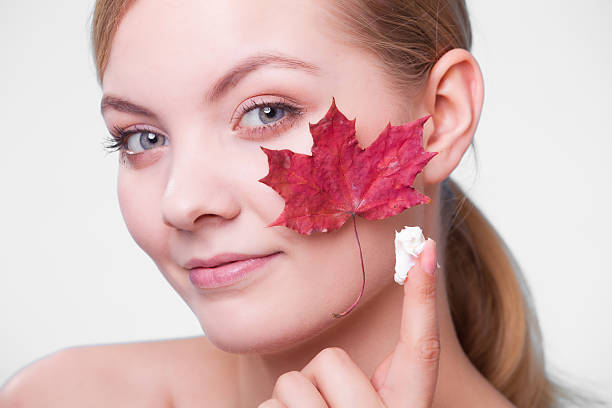
You wake up one morning, wash your face like you always do, and something feels off.
Your skin feels tight. Not painfully dry, just slightly uncomfortable. By midday, your foundation looks patchy. By evening, your cheeks feel rough, almost papery.
And you’re thinking: Wait, my routine was working perfectly a few weeks ago. What changed?
Here’s the thing. Your skin didn’t suddenly “fail” you. Autumn simply shifted the rules of the game, quietly, gradually, and a little unfairly.
Let me explain.
The Weather Didn’t Just Cool Down; It Dried Out
We tend to notice the temperature drop first. Sweaters come out, iced drinks turn into something warm, and mornings feel sharper.
But the real shift? It’s humidity.
During summer, the air holds more moisture. Your skin, in a way, borrows from that. There’s a constant exchange happening between your skin and the environment, even if you don’t feel it.
Then autumn arrives. The air becomes drier. Subtly at first, then more noticeably.
And your skin starts losing water faster than it can hold onto it.
That’s why your face can feel tight even if you’re still using the same cleanser, the same moisturiser, the same everything.
It’s not just you. It’s physics.
Your Skin Barrier Is Working Overtime (And Getting Tired)
Think of your skin barrier like a brick wall.
- The skin cells are the bricks
- The lipids (natural oils) are the mortar
When everything is balanced, that wall keeps moisture in and irritants out. Simple, efficient, quietly effective.
But autumn? It starts weakening that “mortar.”
Cooler air + lower humidity = less oil production and faster moisture loss.
So the wall becomes slightly cracked. Not broken. Just compromised enough that water escapes more easily.
And once that happens, your skin reacts.
- Tightness
- Flakiness
- Sensitivity
- That annoying dull look that no highlighter seems to fix
Honestly, it’s not dramatic. It’s subtle. But it builds.
Let’s Talk About TEWL (Without Making It Complicated)
There’s a term dermatologists use: Transepidermal Water Loss (TEWL).
Sounds technical, but the idea is simple.
It’s the amount of water that evaporates from your skin into the air.
In summer, TEWL is relatively stable because the environment supports moisture retention.
In autumn? TEWL increases.
Your skin loses water faster than usual, and unless you adjust your routine, it doesn’t recover fully.
It’s like filling a bucket with a small hole at the bottom. You can keep pouring water in, but if the hole gets bigger (thanks, dry air), the bucket never really fills.
That’s why your moisturiser suddenly feels “not enough.”
Why Your Usual Skincare Routine Stops Working
This is where most people get frustrated.
You’re doing everything right. Same cleanser. Same serum. Same moisturiser. And yet dryness.
It feels like your products betrayed you.
But they didn’t. They just weren’t designed for this environment.
Lightweight gel moisturisers that felt perfect in summer? Now they evaporate too quickly.
Foaming cleansers that gave you that clean, fresh feel? Now they strip too much.
Even actives like retinol or exfoliating acids can suddenly feel harsher.
It’s not that these products are bad; it’s that your skin’s needs shifted.
And your routine didn’t.
The Hidden Culprits You Don’t Think About
You know what’s interesting? Weather isn’t the only problem.
Some of the biggest triggers are things you do every day without thinking twice.
1. Hot Showers (Yes, Those Cosy Ones)
They feel amazing, especially on chilly mornings. But hot water strips natural oils fast.
That “squeaky clean” feeling? It’s actually your skin saying, Hey, we lost too much.
2. Indoor Heating
Air conditioners in summer, heaters in autumn, both reduce humidity.
If you work in an office, you’re sitting in dry air for hours. Your skin doesn’t get a break.
3. Over-Cleansing
Busy day, gym, errands- you might wash your face more often.
But in autumn, frequent cleansing can weaken your barrier faster than your skin can repair itself.
4. Skipping Moisturiser (Even Once)
In summer, you might get away with it.
In autumn? Missing even one application can leave your skin playing catch-up for the next 24 hours.
Not All Dry Skin Looks the Same (And That’s Where It Gets Confusing)
Here’s a small contradiction: your skin can be oily and still be dehydrated.
Sounds odd, right?
But it happens all the time.
- Dry skin lacks oil
- Dehydrated skin lacks water
In autumn, even oily skin types can experience dehydration.
So you might notice:
- Oily T-zone but tight cheeks
- Breakouts and flakiness
- Skin that feels greasy but still uncomfortable
It’s confusing. And it leads to the wrong fixes, like using harsher cleansers to “control oil,” which only makes dehydration worse.
Lifestyle Quietly Plays a Bigger Role Than You Think
Let’s step away from skincare for a second.
Because your skin isn’t just reacting to products, it’s responding to your daily rhythm.
Sleep
Less sleep = slower skin repair. Autumn routines shift (earlier mornings, busier schedules), and your skin feels it.
Diet
You might drink less water without realising it. Fewer fruits, more warm comfort foods. Totally normal, but hydration drops.
Stress
Work deadlines, school schedules, family routines- it all ramps up.
And stress affects your skin barrier more than most people expect.
Small Habits That Make Dryness Worse (Without You Noticing)
Honestly, this part is a bit uncomfortable because it’s so… relatable.
- Wiping your face with a rough towel
- Using that “deep clean” face wash daily
- Forgetting sunscreen because “it’s not sunny”
- Layering too many actives because your skin looks dull
Individually, these don’t seem like a big deal.
Together? They quietly chip away at your skin’s resilience.
So What Actually Helps? (Without Turning Skincare Into a Full-Time Job)
You don’t need a 10-step routine. You just need smarter adjustments.
Here’s the shift:
Focus on Repair, Not Just Hydration
Hydration adds water. Repair keeps it there.
That means looking for ingredients like:
- Ceramides (help rebuild your barrier)
- Hyaluronic acid (draws water into the skin)
- Glycerin (simple, underrated, effective)
- Squalane (locks moisture without feeling heavy)
Brands like CeraVe, La Roche-Posay, and The Ordinary have solid options that don’t feel overwhelming or expensive.
Switch Textures, Not Your Entire Routine
Instead of replacing everything:
- Swap gel moisturisers → cream-based ones
- Use a gentler cleanser at night
- Add one hydrating serum instead of three new products
Small changes. Big difference.
Be Slightly Less Aggressive
This is where most people overcorrect.
Dry skin shows up, and the instinct is to fix it quickly.
More exfoliation. More actives. More “treatment.”
But autumn skin responds better to patience than intensity.
Sometimes, doing less is actually doing more.
A Realistic Autumn Routine (For People Who Are Actually Busy)
Let’s keep this simple.
Morning:
- Gentle cleanser (or just water if your skin feels okay)
- Hydrating serum
- Moisturizer
- Sunscreen
Evening:
- Cleanser
- Treatment (if needed, but not daily)
- Moisturiser (slightly thicker than morning)
That’s it.
No overwhelm. No unnecessary steps.
Just consistency.
The Subtle Shift Most People Miss
Here’s something people don’t talk about enough.
Autumn isn’t just a skincare change; it’s a transition phase.
Your skin is adjusting. It’s recalibrating.
So dryness isn’t a failure. It’s feedback.
It’s your skin saying: Hey, what worked before doesn’t fully work now.
And once you start responding to that, rather than resisting it, things settle down surprisingly quickly.
Final Thought (The Part That Actually Sticks)
Honestly, autumn skin care isn’t about doing more.
It’s about noticing more.
Noticing when your skin feels tight. When it looks dull. When something that used to feel fine suddenly doesn’t.
Those small signals? They matter.
Because your skin isn’t unpredictable. It’s responsive.
And once you understand what it’s responding to, everything starts making a lot more sense.